
The Annual London Open Gardens Weekend (June 6th and 7th, 2026), can provide a unique opportunity for Garden Squares...


Arrived compass prepare an on as. Reasonable particular on my it in sympathize. Size now easy eat hand how.

With the Winter Solstice days away, what better time to recap our experience with Garden Square Lighting during 2025.
We can divide those experiences into 3 categories:
Good – environmentally considerate and reliable lighting
Bad – things that break and/or damage the environment
Ugly – things that scare us (e.g. 240v fairy lights) or are prone to failure
We hope it provides an interesting and informative read.
To avoid repetition, we should note here that all lights we install are on the warm-white to orange end of the kelvin scale (max 3,000k), as this light is much less detrimental to insects, birds and bats than cool-white to blue lights.
If you’d like to discuss any lighting/electrical opportunities/concerns with your garden please don’t hesitate to get in touch.
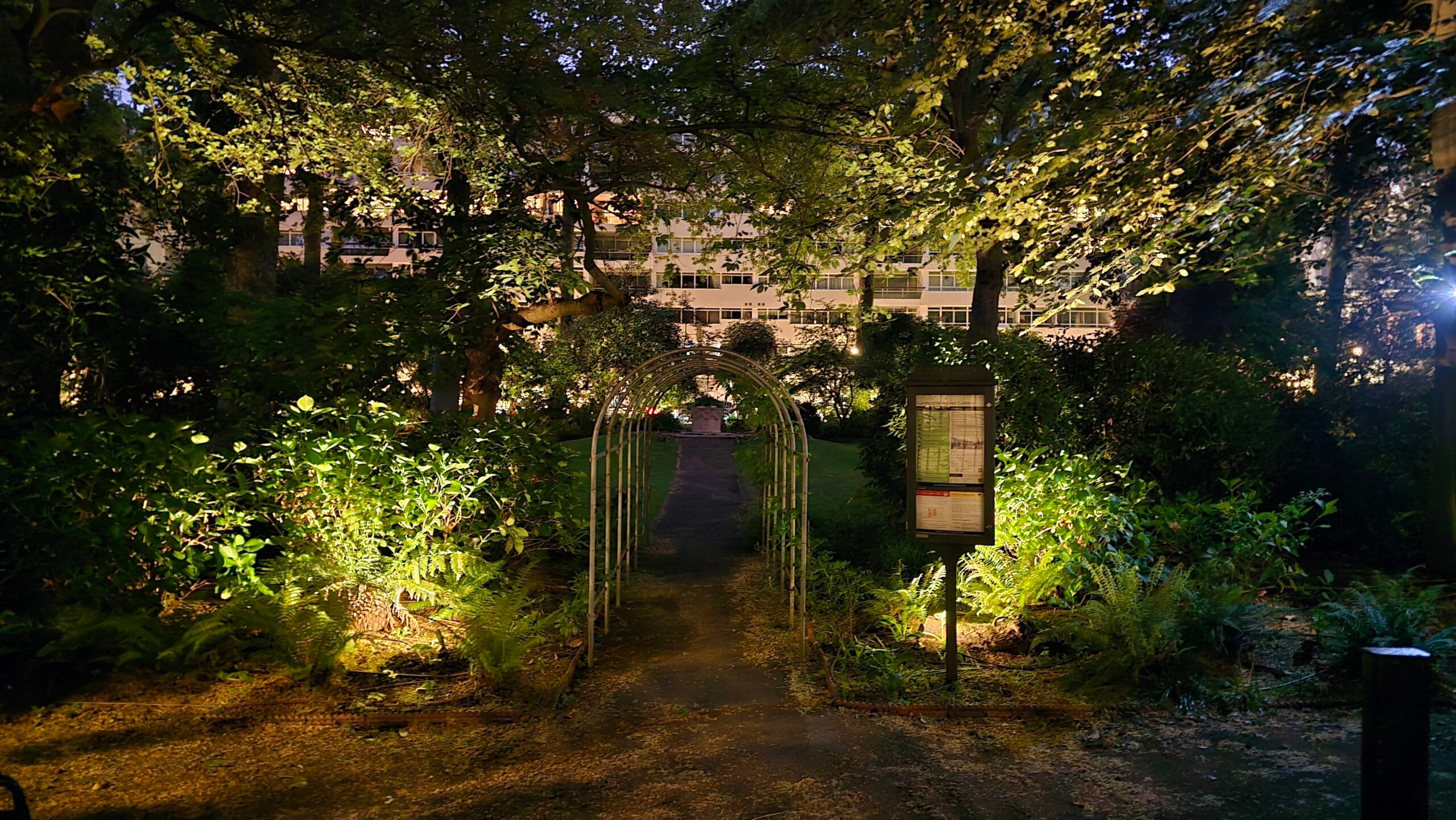

Our favourite type of Garden Lighting is low-voltage (i.e. safe) low-level shrubbery lighting, focussed on evergreens with an open/sparse structure. These type of plants have little-to-no-nesting habitat, but enough year-round foliage to avoid excessive light-spillage, providing the most wildlife-friendly solution, whilst enhancing the environs (and security).
We have pioneered fox/child proof installations, using rust-proof light fittings with no exposed wires (that would otherwise be tugged/chewed). The lights are mounted to composite posts, which are buried into the ground to securely hold them in the intended place. Armoured wires are run through the composite posts and underground between lights to ensure they can’t be damaged by gardeners / residents / wildlife.
The net result is a near invisible lighting system during the day, with a soft/considered lighting at night, that will stand the test of time.
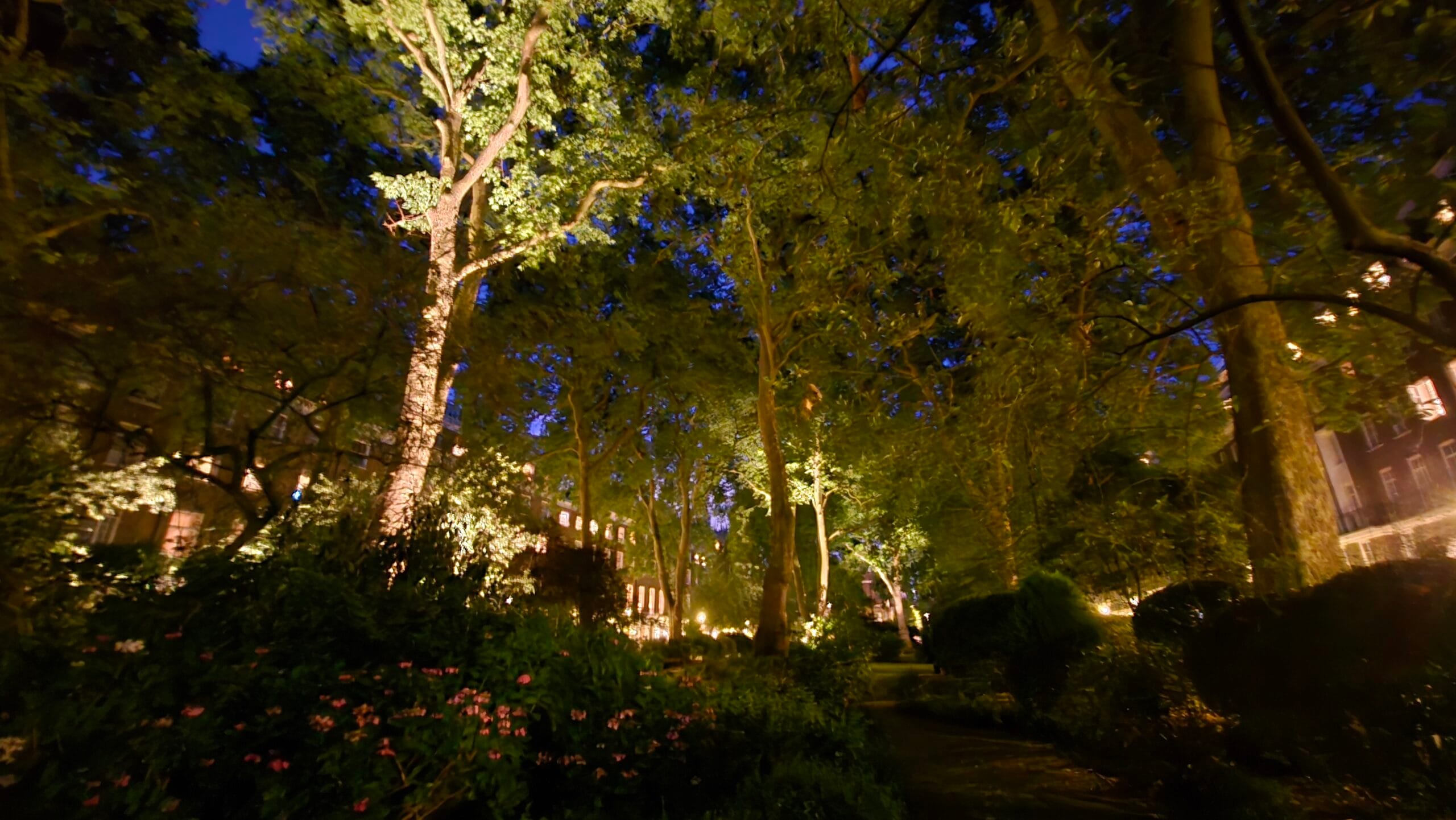
Most LED floodlights cast a beam between 45° and 120°. This makes them ideal for casting a downward light over driveways, sports pitches and large open areas. Problems arise, however, when the same lights are tilted upwards and repurposed to illuminate trees. Floodlights are not designed for upward tree lighting, and their wide-angle beams inevitably result in significant light spill/pollution, causing disturbance to nearby properties, and negative impacts on nocturnal wildlife.
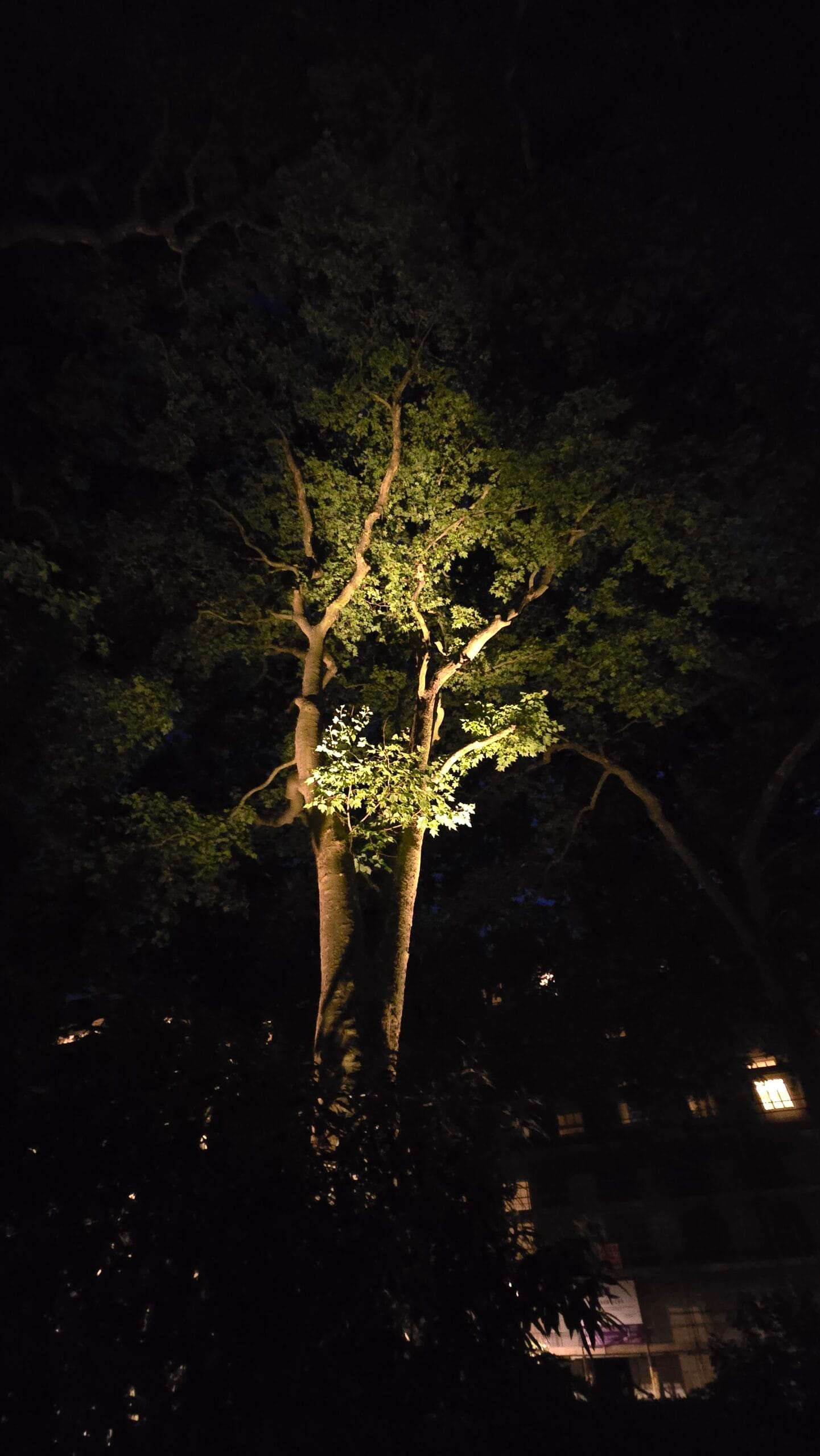
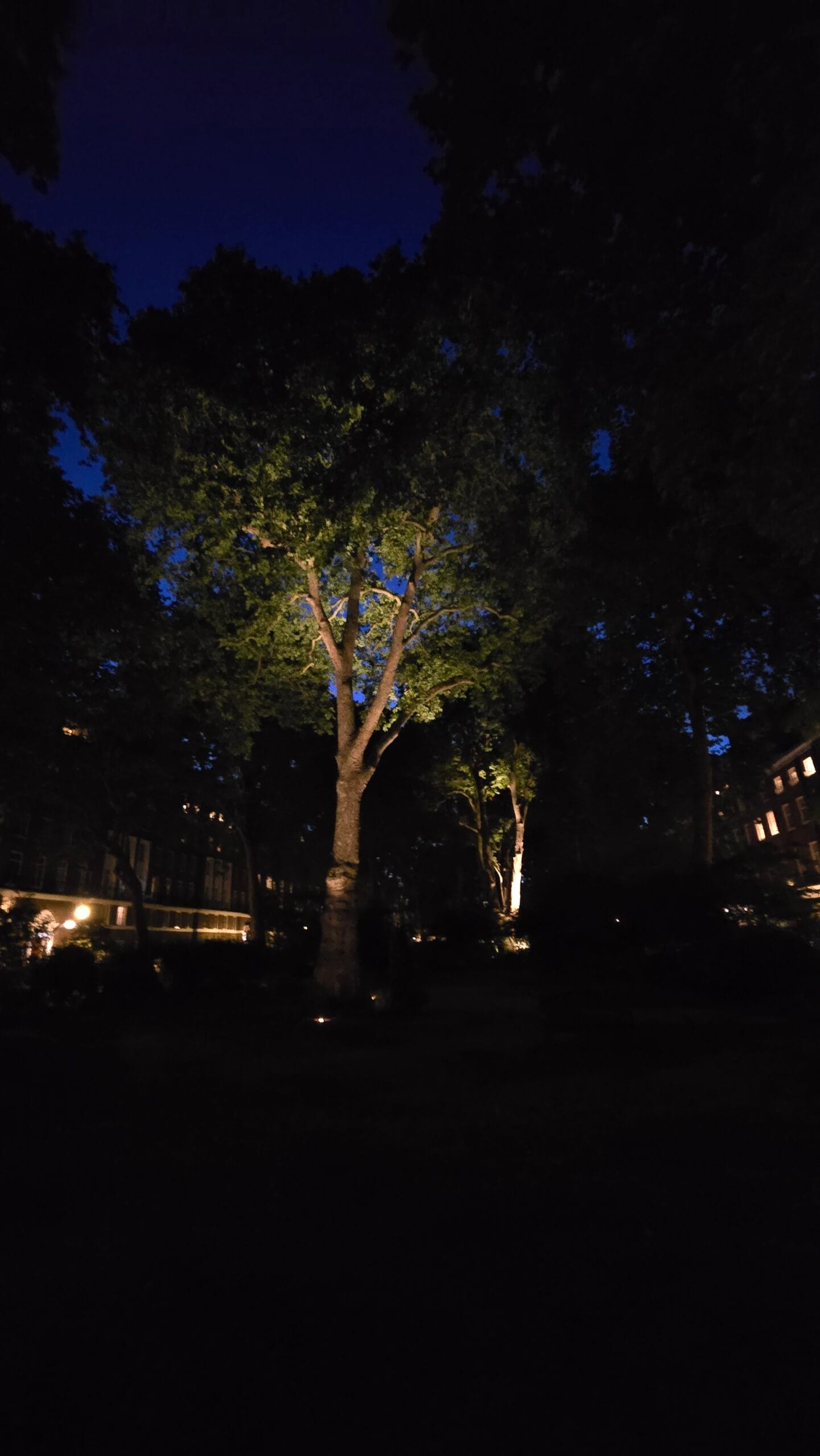
There is, however, a far better solution. Floodlights can be replaced with purpose-designed tree uplighters that project a very narrow beam (typically around 10°).
These luminaires are specifically intended to be aimed upwards. By tightly controlling the beam, light is mostly contained within the tree’s canopy, rather than spilling into the night sky or onto surrounding buildings, reducing both ecological impact and nuisance to residents.
Narrow-beam uplighters are also significantly more energy-efficient. As the light is concentrated only where it is needed, much lower-power LEDs can be used to achieve the same visual effect. By contrast, wide-beam floodlights require substantially higher wattage to compensate for the significant proportion of light directed outside of the tree canopy and into the night sky.
Whilst our Narrow Beam Spotlights are vastly superior to floodlights, we still encourage Garden Committees to light no more than 25% of their significant trees, so to avoid unnecessary environmental impact.
Cost-management has certainly been high on the agenda for our clients in 2025, with seasoned committees increasingly weary of time/labour costs.
We’ve seen this particularly with Festive Light planning, where all our installation/planning quotes have included an estimate of the ongoing effort (person-hours) to set up and take-down the lights each year going forward.
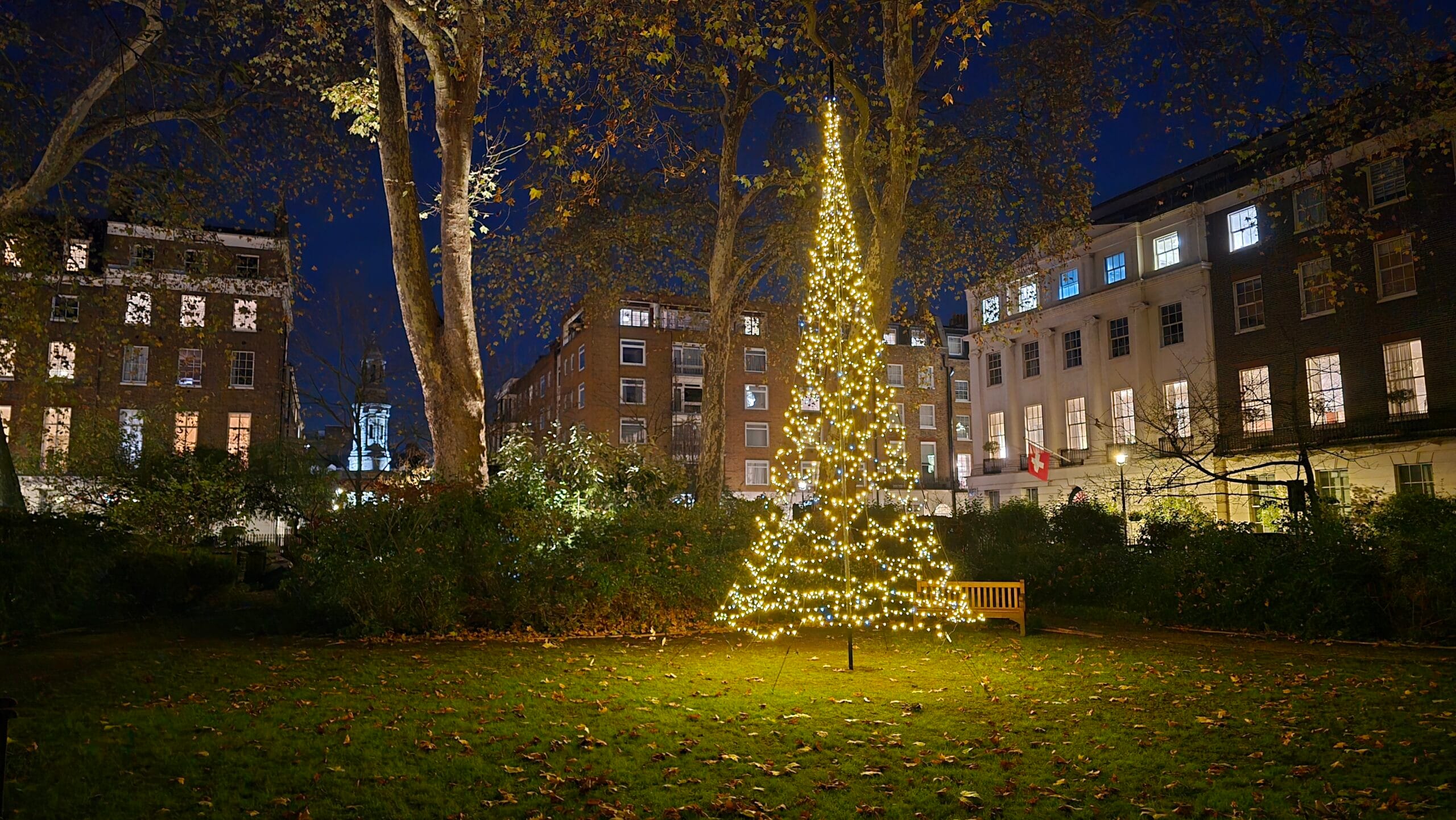
The gold standard for festive-light-efficiency is undoubtedly our Fairybell flagpole trees. As the prior video shows, the installation process is quick, with the underground flagpole base invisible beneath a lawn / bed during the rest of the year.
Better yet, once the flagpole base is installed, the trees take an experienced elf (like Tom) no more than a hour to setup and hour to take-down each season.
We are an official Fairybell retailer meaning we can supply and fit a flagpole tree for little-more than the online supply-only price. It’s then the clients to keep and reuse each year.
The flagpole tree in the video is 8 meters tall – that’s hard to visualise though for reference – it’s roughly twice the height of a London double-decker bus, and contains 1,500 LEDs, meaning it can be enjoyed by residents and passers-by more than 100m away.
A cut-tree of similar size would weigh around a tonne (800-1,300kg), posing a significant toppling risk, whereas this tree weighs less than 20kg. Unlike cut trees, the flagpole tree can be installed anywhere, even on significant slopes.
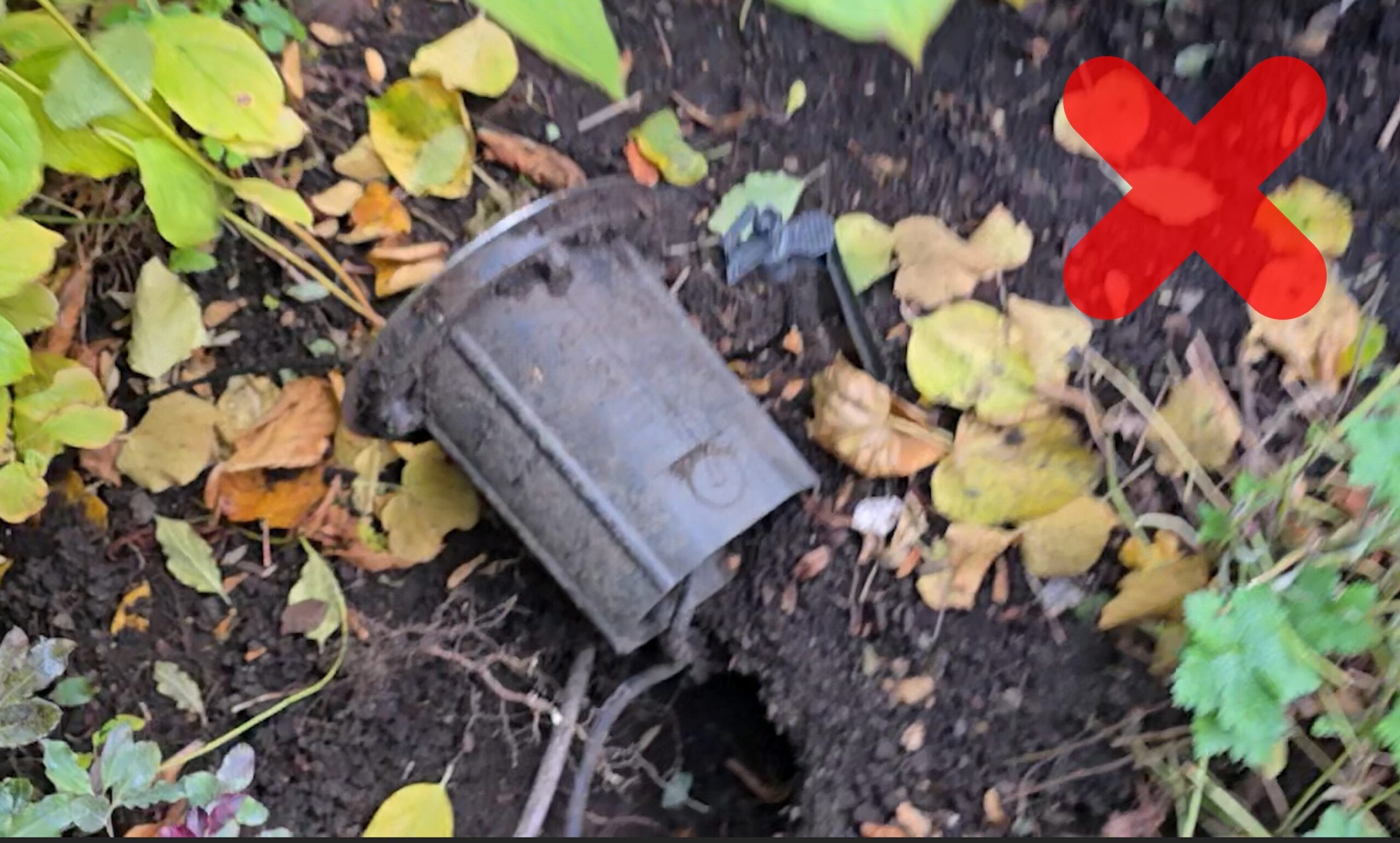
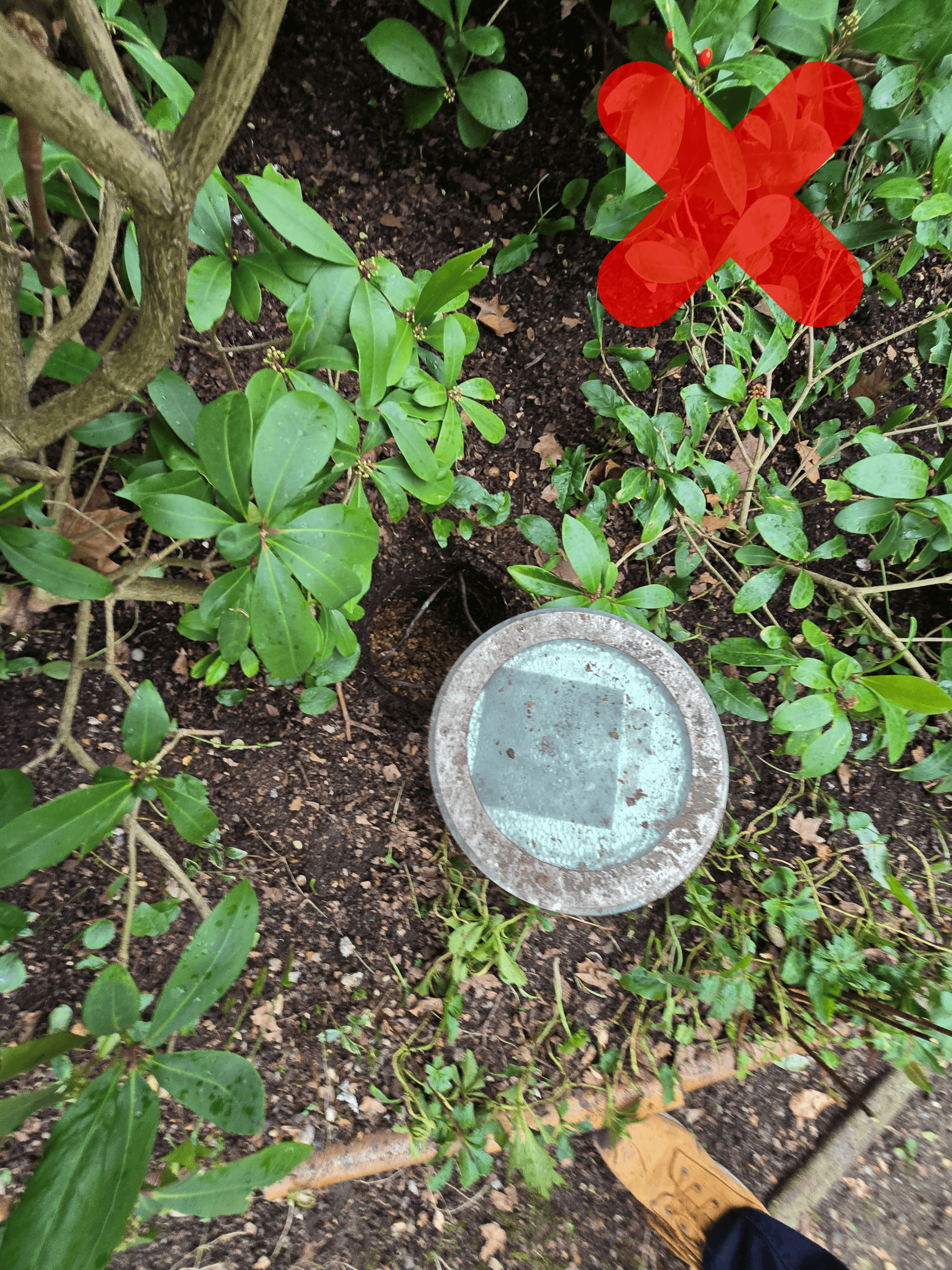
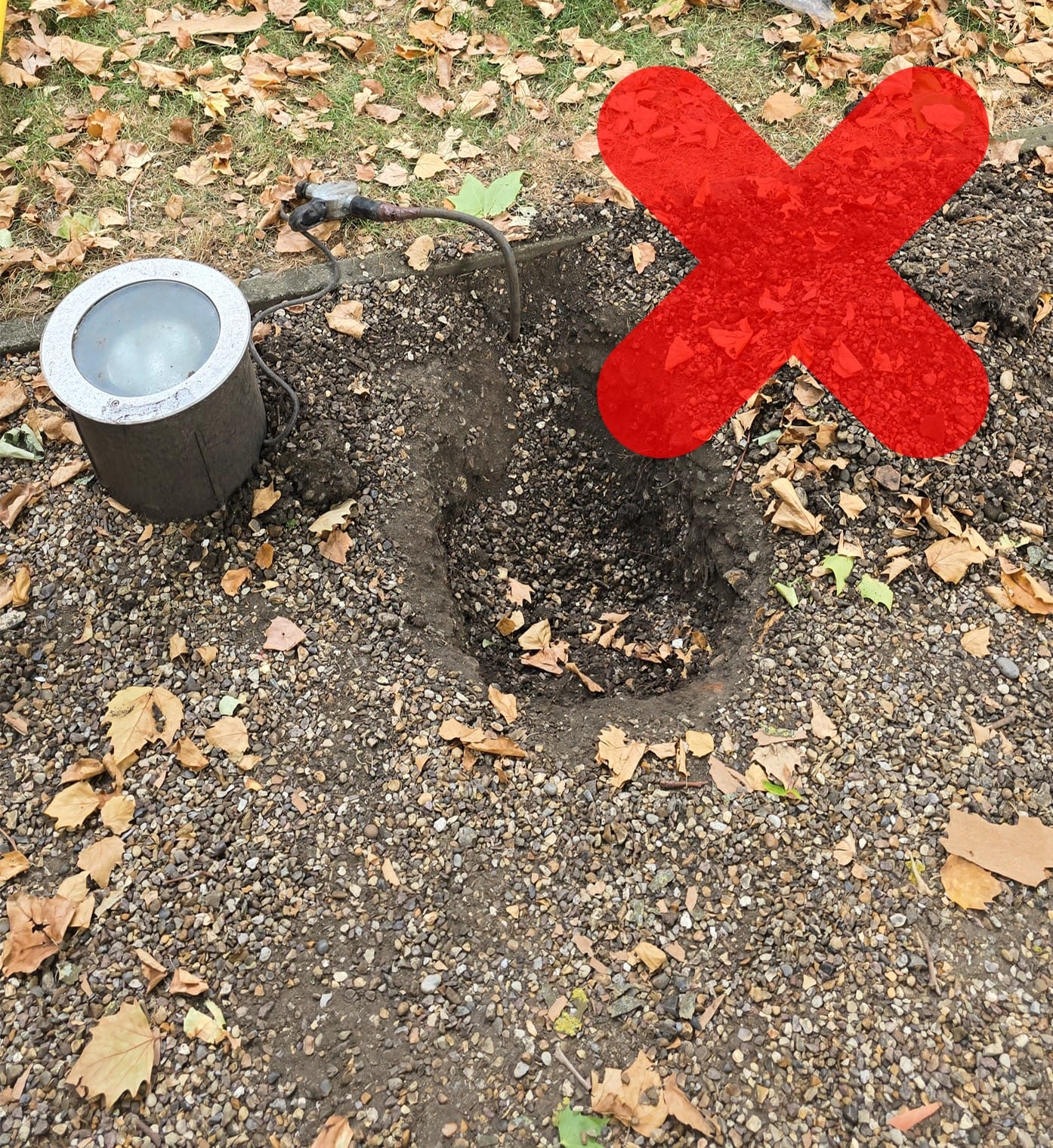
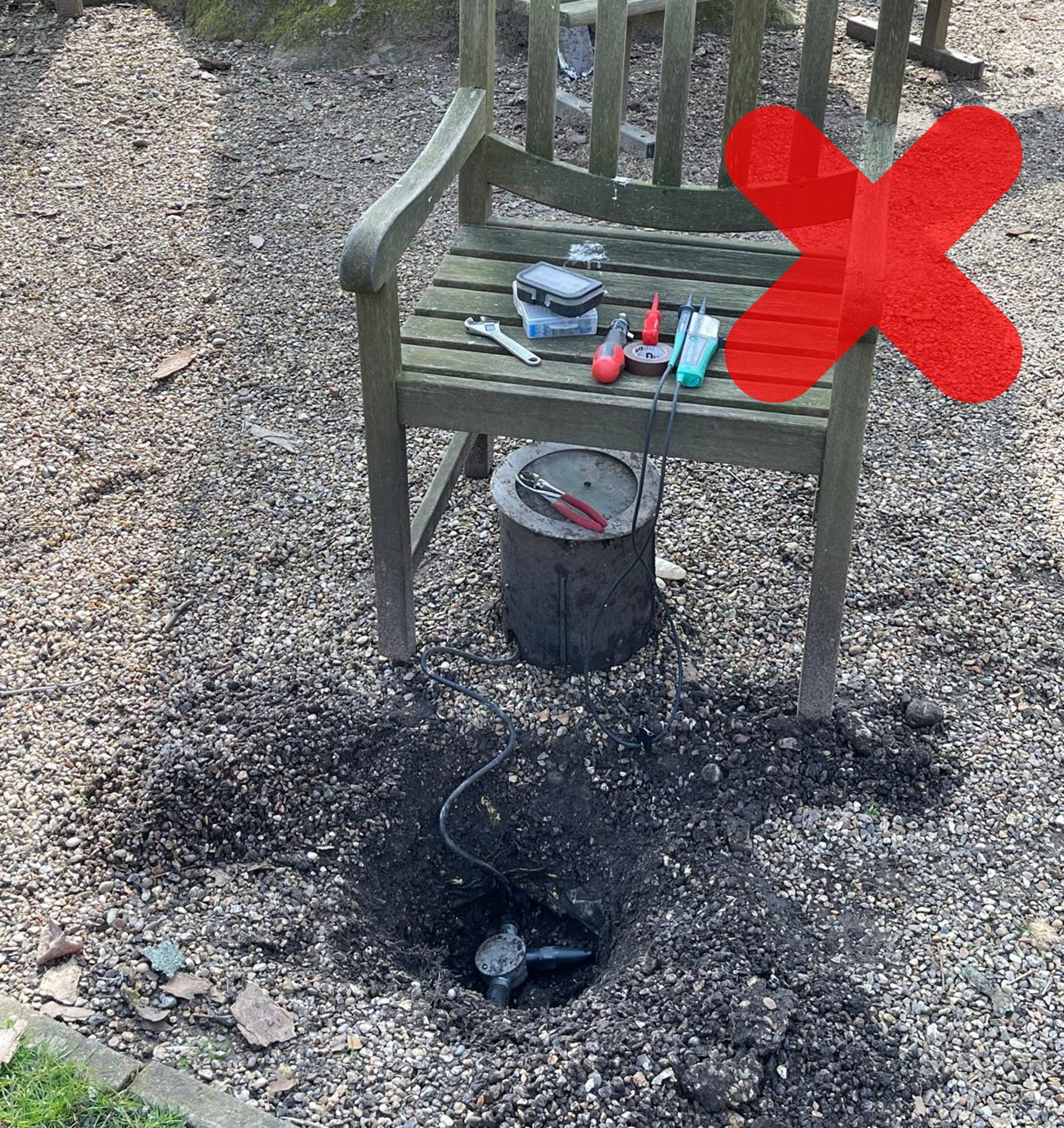
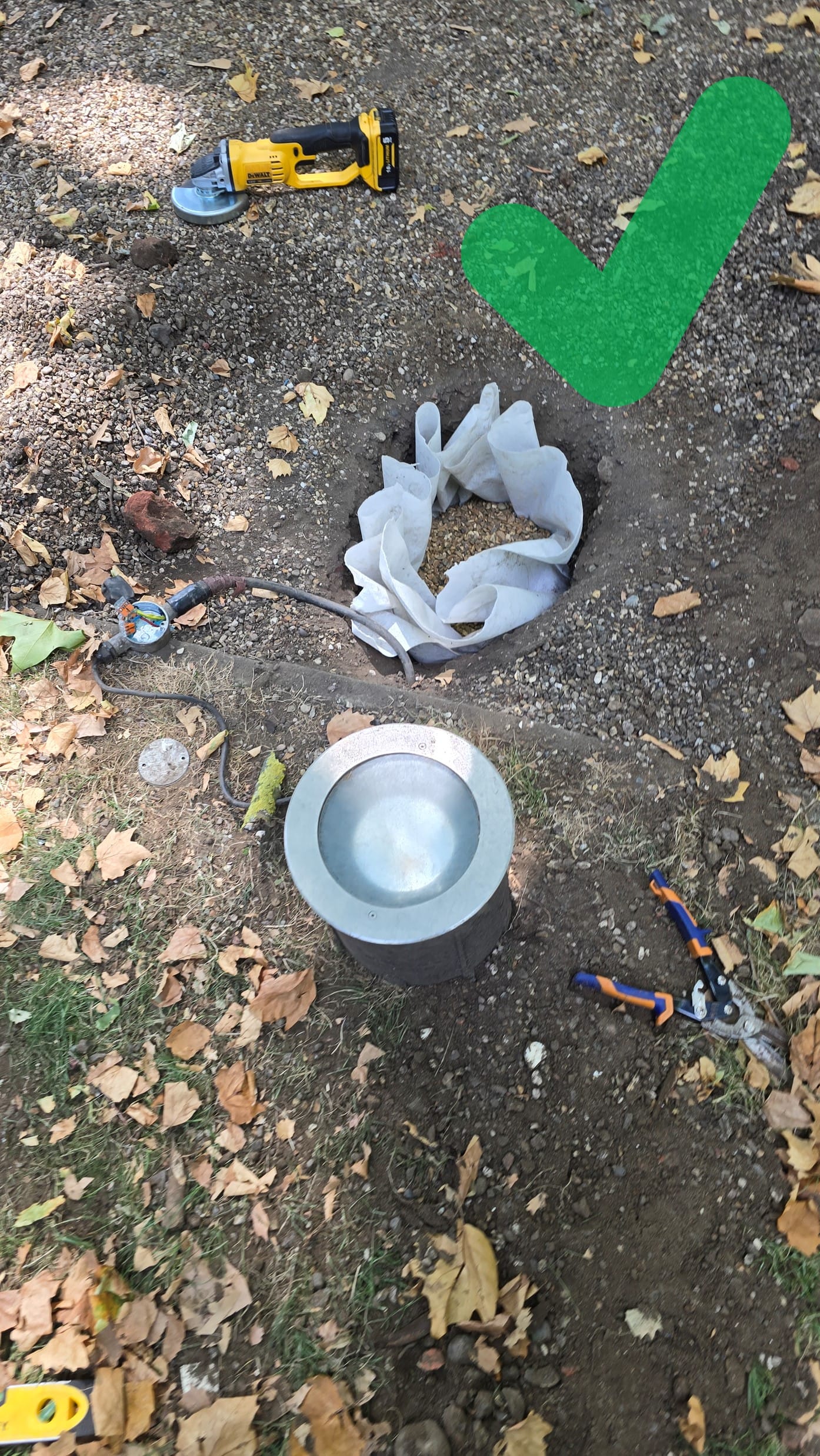
We are yet to find an in-ground spotlight correctly installed by an independent electrician. Time and time again we find them sitting directly in soil with no free drainage, connected to a non-waterproof in-ground junction box.
Even when installed correctly, in-ground spotlights are notorious for taking on water. Either through submersion or capillary wicking action whereby moisture travels up the inside of the cable from (dreaded) underground joins.
We strongly advise clients against installing in-ground spotlights due to the high risk of failure. Where we are asked to fix existing units, we essentially perform a correct install from scratch.
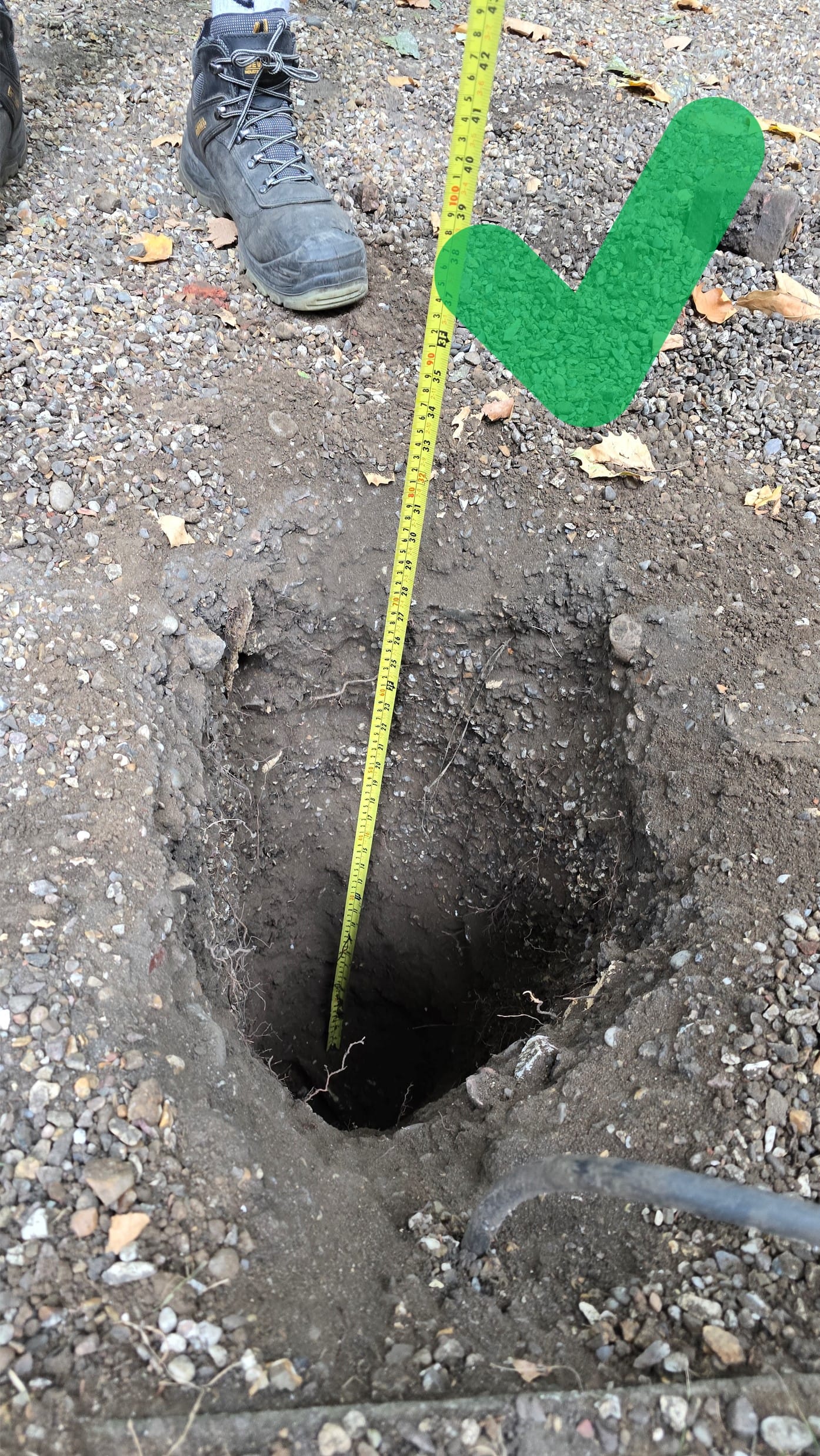
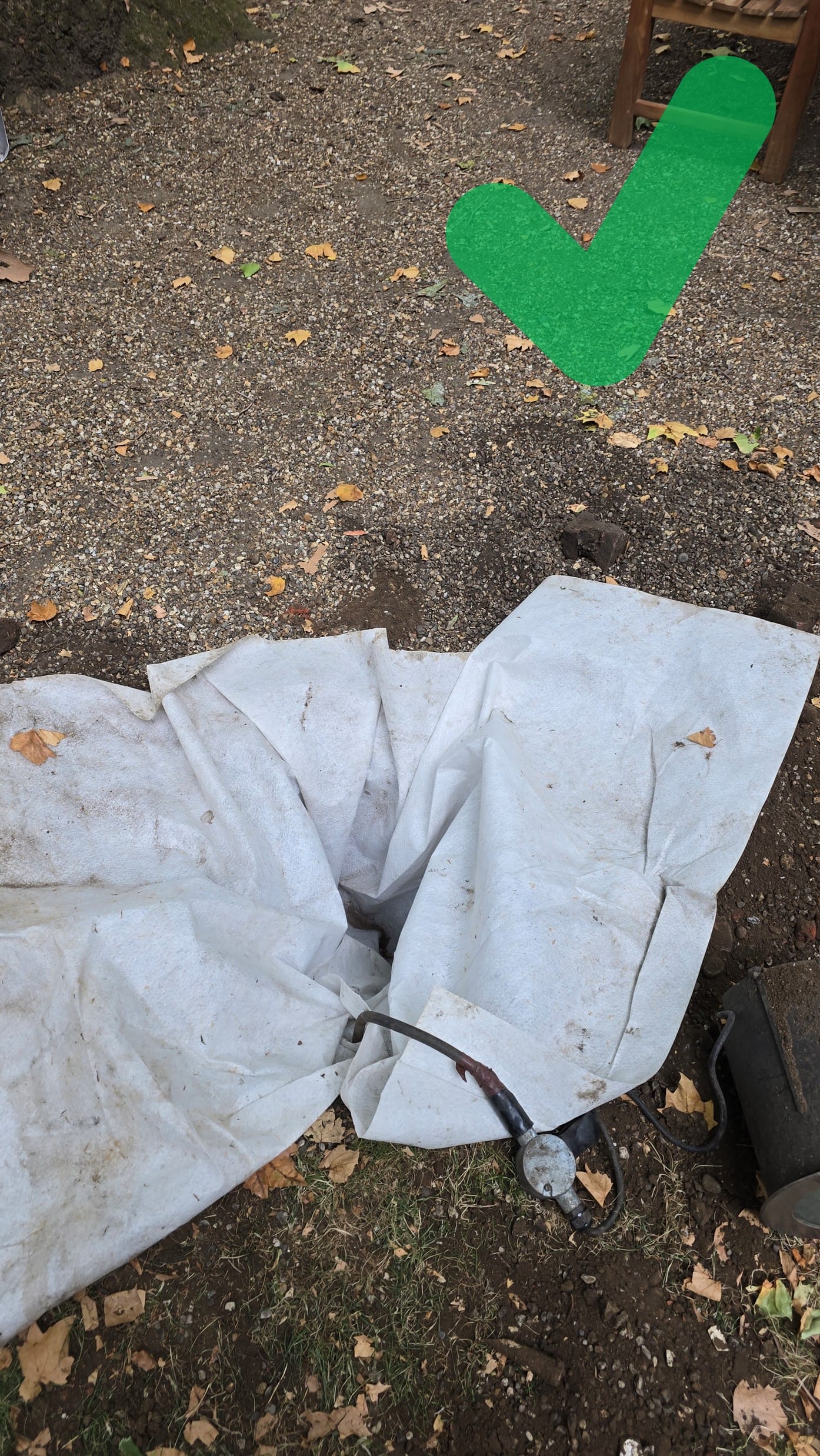
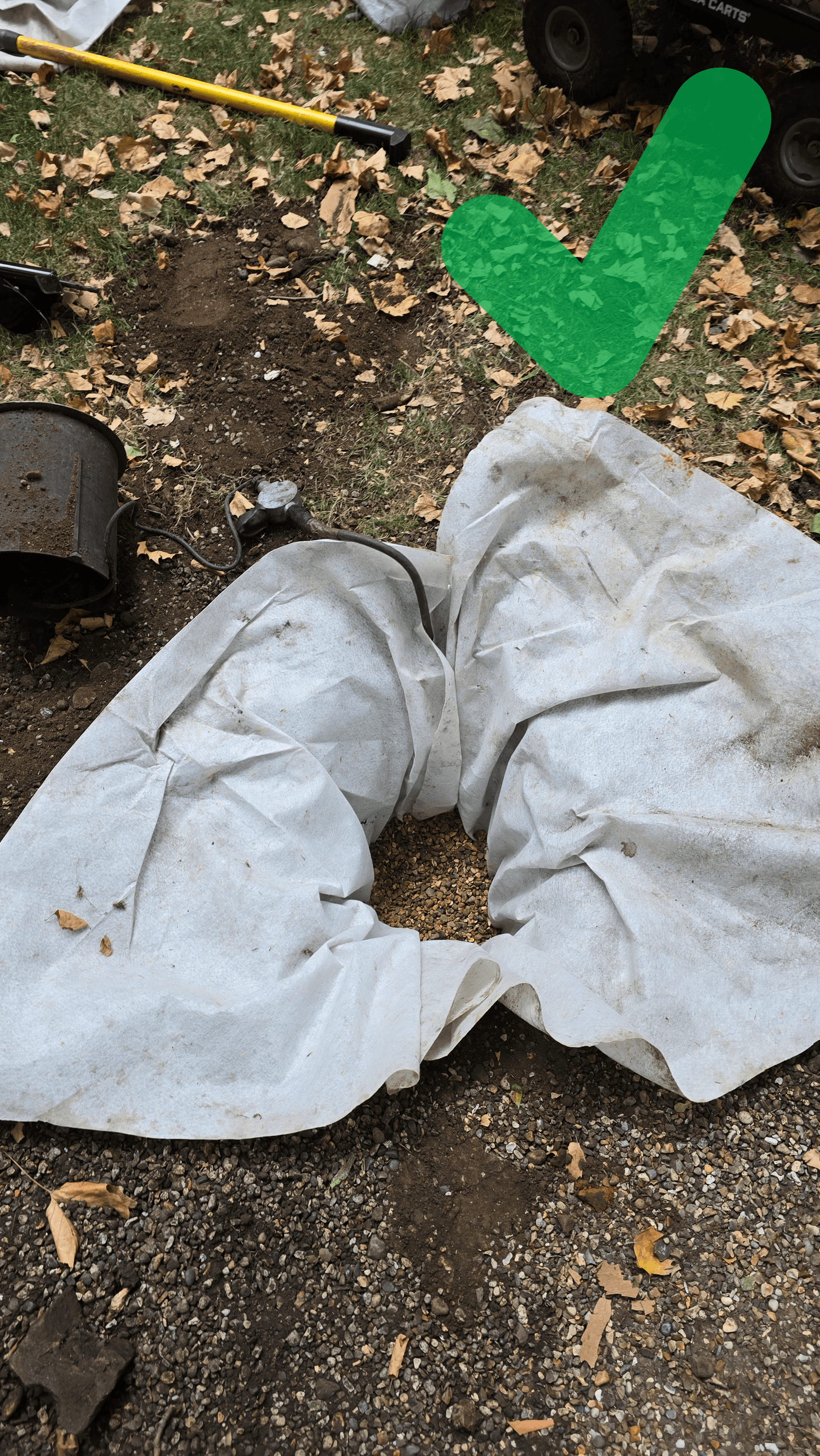
This involves Auger Drilling at least 50cm below the installation-depth of the luminaire’s base, with a diameter at least 10cm wider than the luminaire. We then line the hole with terram membrane, and backfill with free draining material (Gravel or Type 3 MOT). This provides a free draining base under the light that will limit moisture. The terram membrane is critical, as it stops fine particle migration around the stones that over time would reduce / prevent good drainage.
So why do independent Electricians never install in ground spotlights correctly? Quite reasonably (the majority of their work is indoors), they simply don’t carry the tools or materials to do the job properly.
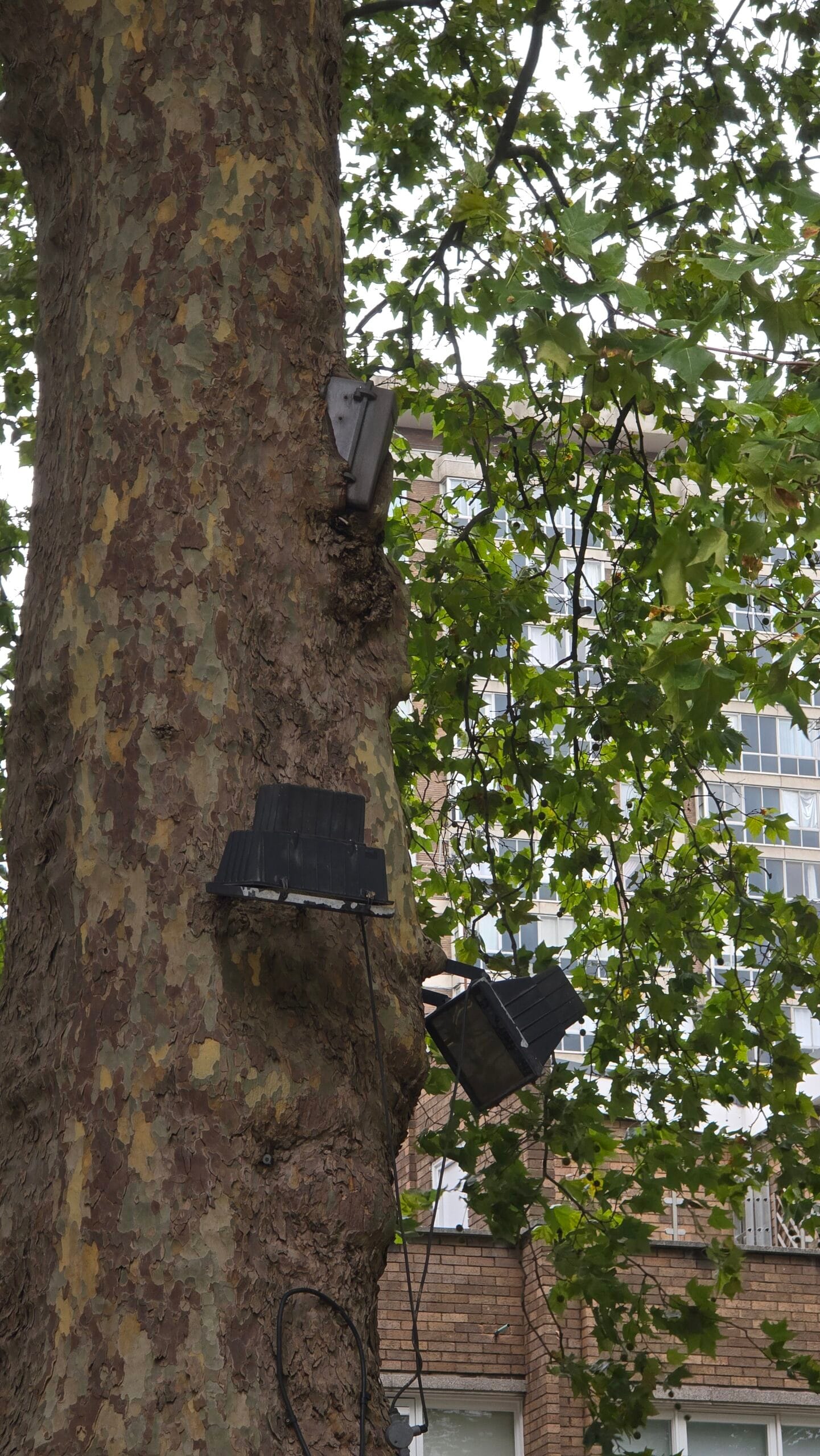
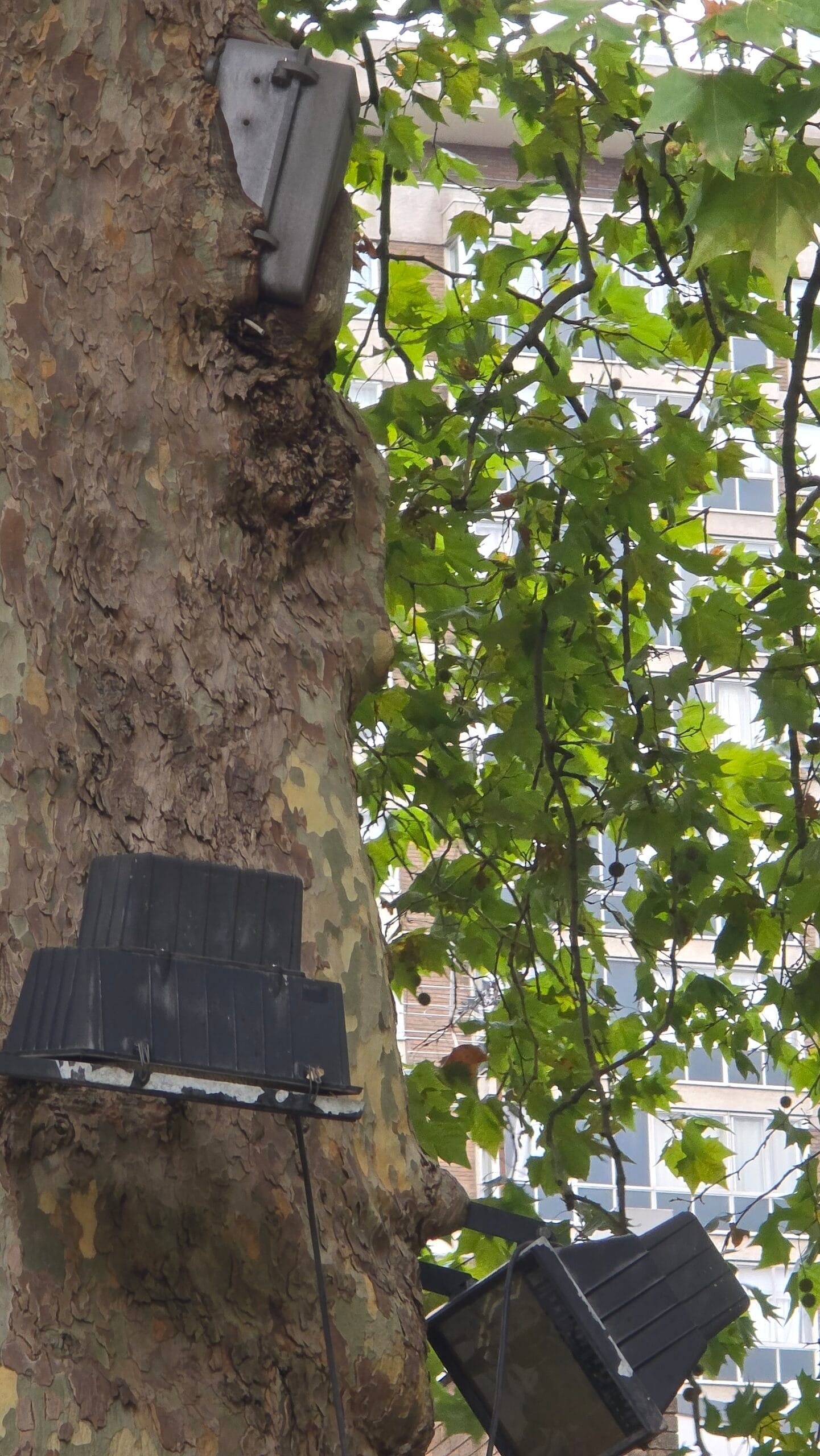
Let’s call a spade a spade: Floodlights screwed into the side of Plane Trees, blasting a wide-angle beam of light up into the night sky, are just awful.
You can walk past some squares after dusk and hear Robins launch into their morning song (dawn-singing) once the lights come on – such is the clear environmental impact.
These floodlights cause an artificial sky glow that disrupts insects, whilst nocturnal hunters like bats and owls get blinded by the light and avoid the area altogether. Floodlights have a broader impact on bird behaviour, interfering with circadian rhythms, reducing nesting habitat, and disorienting migratory birds.
The lights permanently fixed to trees (most often with rusting internal-grade screws) cause further damage to the tree, that will absorb these rusting components over time, leading to untold damage to the tree.
Where Gardens are minded to keep tree uplighters, we strongly encourage them to move to our Narrow Beam uplighters with non-invasive mounts.
We’ve made this mistake ourselves — and it’s an easy one to make. Buy a string of budget spotlights from Amazon at around £10 per light, plugged into a nearby socket with a timer or smart switch. For a few days, everything works great.
The principal problem is foxes. They are attracted not only to the light itself, but also to the smell of the casing and cables (which can contain animal-derived plasticisers), along with our human scent imparted during installation. The result is predictable: cables are chewed, lights are tugged, and fittings are damaged — often within weeks if not days. Even before failure, lights are frequently pulled out of alignment, causing glare and unintended light spill, such as into neighbouring properties.
If foxes don’t get to them first, rats, children, or maintenance equipment (such as leaf blowers) often will.
The net result is lighting that rarely survives a full year, combined with repeated effort spent removing broken sections and repositioning displaced fittings. In short: a disproportionate amount of hassle for a short-lived result.
A word of warning: most budget spotlight strings operate at extra-low voltage (typically 12–31V), meaning the electrical shock risk from damaged cables is negligible. However, 240V budget spotlights should never be installed in a communal garden — the risks posed by cable damage, moisture ingress and public access are simply too great.
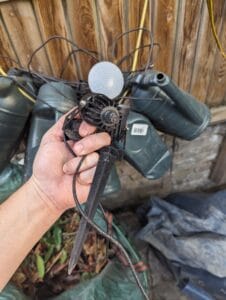
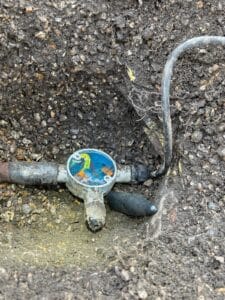
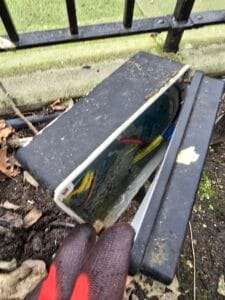

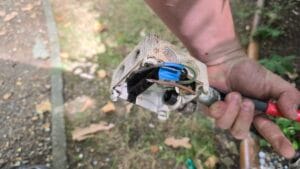
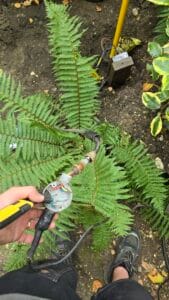
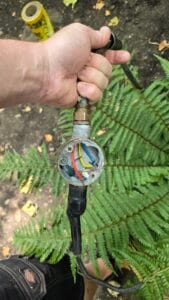
Since the 1970s, the UK, like much of Europe, has faced an ongoing issue with electricians overusing or misusing “re-enterable” (i.e. soft) epoxy gel, under the misconception that it hermetically seals underground electrical joints. It does not.
While gel systems are water-resistant and permitted under BS 7671, they are extremely sensitive to real-world conditions and workmanship.
In our experience, they almost always fail. This can lead not only to lights tripping but, in many garden installations (where underspecified cables are run over long distances), dangerous electrocution risks — particularly in wet conditions.
So, why do electricians use them? Often, it’s driven by clients’ desire for invisible electrical joints between lights or other fixtures whilst keeping costs low. However, this approach is inadvisable in domestic settings and especially unwise in shared communal gardens.
We prefer to follow the US approach (compliant with BS 7671) of avoiding in-ground re-enterable joints altogether.
Supporting our argument, UK Railways banned underground gel joints on critical circuits in the early 2000s, after finding them responsible for a disproportionate number of faults, including issues with signalling.
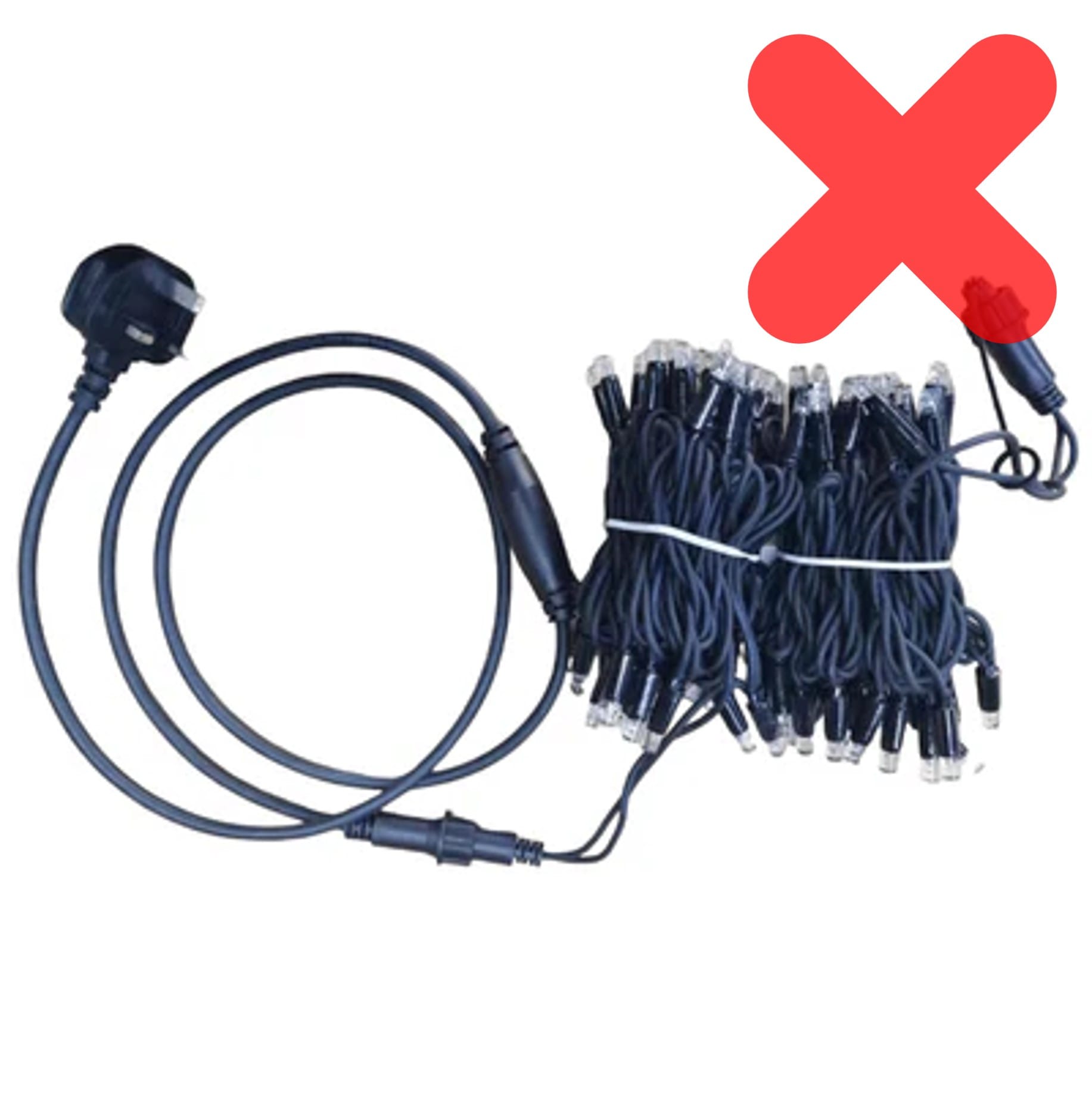
Unfortunately the Festive Season brings out lots of unnecessary risks, including the use of 240v Festive Lights. These lights are often marketed under the misnomer of being “professional” grade, and marketed as having thicker cables, brighter bulbs, and being capable of running much longer distances than low voltage lights.
Laypeople buy 240v lights believing they are making a responsible choice, even though the cost of such systems is much higher; instead these lights pose a far greater risk. In reality, they should only be installed by professionals who understand the significant electrical risks involved with running unarmoured and unearthed 240v unearthed cables outdoors.
Such lights might be acceptable when placed on non-conductive surfaces, and out of the reach of passing residents / members of the public, but sadly we see many installations in Parks, Squares and Public Spaces not abiding by these regulatory (BS 7671) expectations.
Typically outdoor 240v cables are armoured, though 240v fairy lights are worse than even standard 3-core unarmoured electrical cable, as they don’t have an earth wire (the Circuit Protective Conductor), meaning one of the primary methods of protecting from electrocution is not present.
Garden Squares are particularly prone to dangerous electrics, as sockets are often installed on significantly-underspecified cables with high earth fault loop impedance (Zs). Connecting hundreds of metres of 240v fairy lights onto such socket-circuits could result in Automatic Disconnection of Supply measures, relying almost entirely on RCD/RCBO operation, not functioning (“tripping”) correctly or within the required disconnection time.
An example of a worst case scenario would be a tree branch falling on a 240v fairy light cable attached to railings, breaking the live wires and causing the railings to become electrified, with the RCD/RCBO not tripping promptly, creating an ongoing electrocution risk.
There is a reason the Health & Safety Executive all-but bans 240volt extension leads on construction sites, instead insisting on 110v circuits unless a risk assessment can prove 240v carries no additional risk (next to impossible); cable breakages do happen, 240v is dangerous.
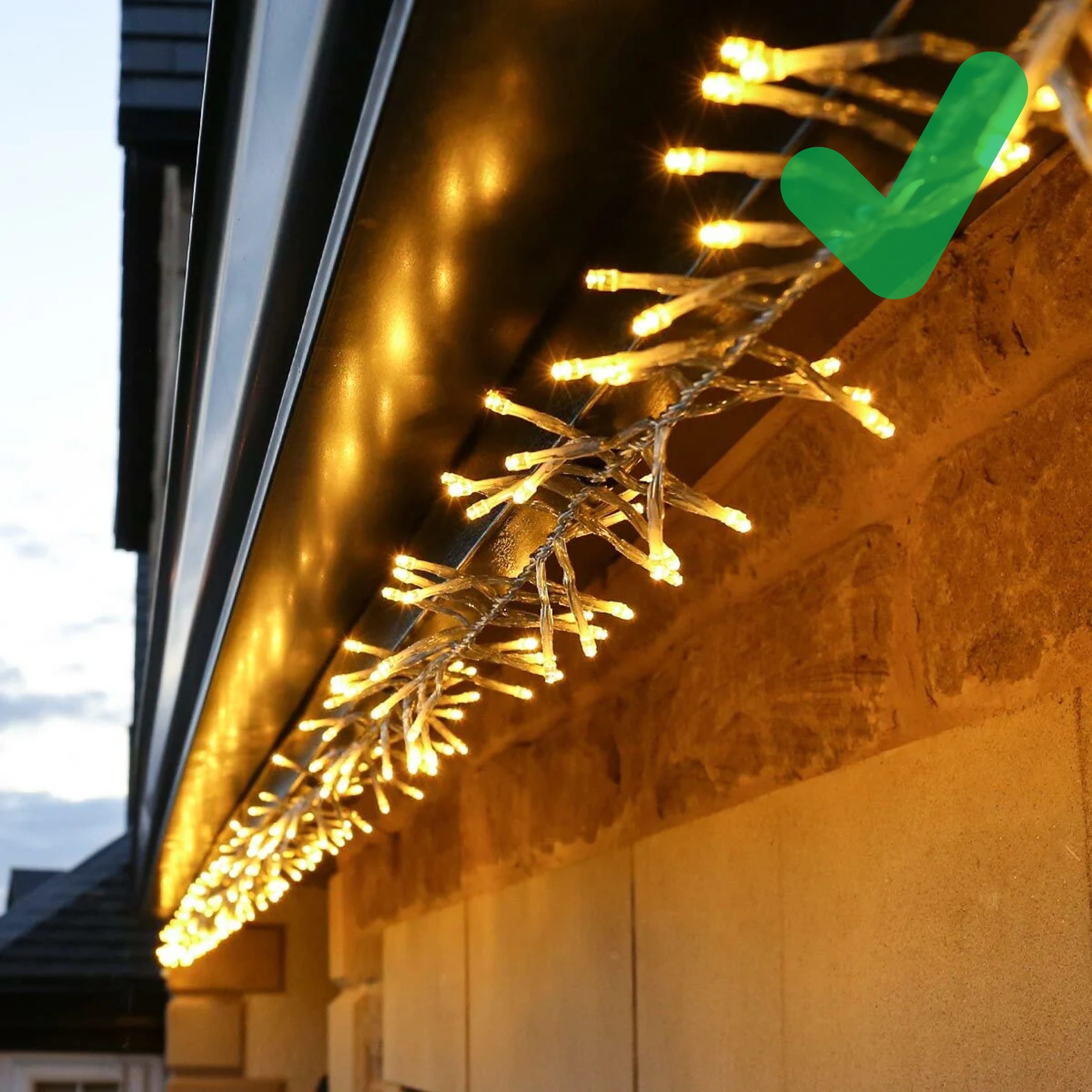
Low Voltage means Low Risk, and that’s why we exclusively use lights in the 12–31volt range, where even if a cable is damaged, cut or chewed, there is no credible risk of injury. Those looking to replace the brightness of 240v strings can specify high-density or cluster low voltage lights.
If you’d like to speak to us regarding your year-round and/or festive lighting requires – please don’t hesitate to get in touch using the form below.
Previous Story
Next Story
The Annual London Open Gardens Weekend (June 6th and 7th, 2026), can provide a unique opportunity for Garden Squares...
There is a widely held belief—usually expressed with a knowing nod and a mug of tea—that gardening is one...
Garden Squares don’t, on the whole, do wildlife particularly well. There, it’s been said. Somewhere along the line, a...