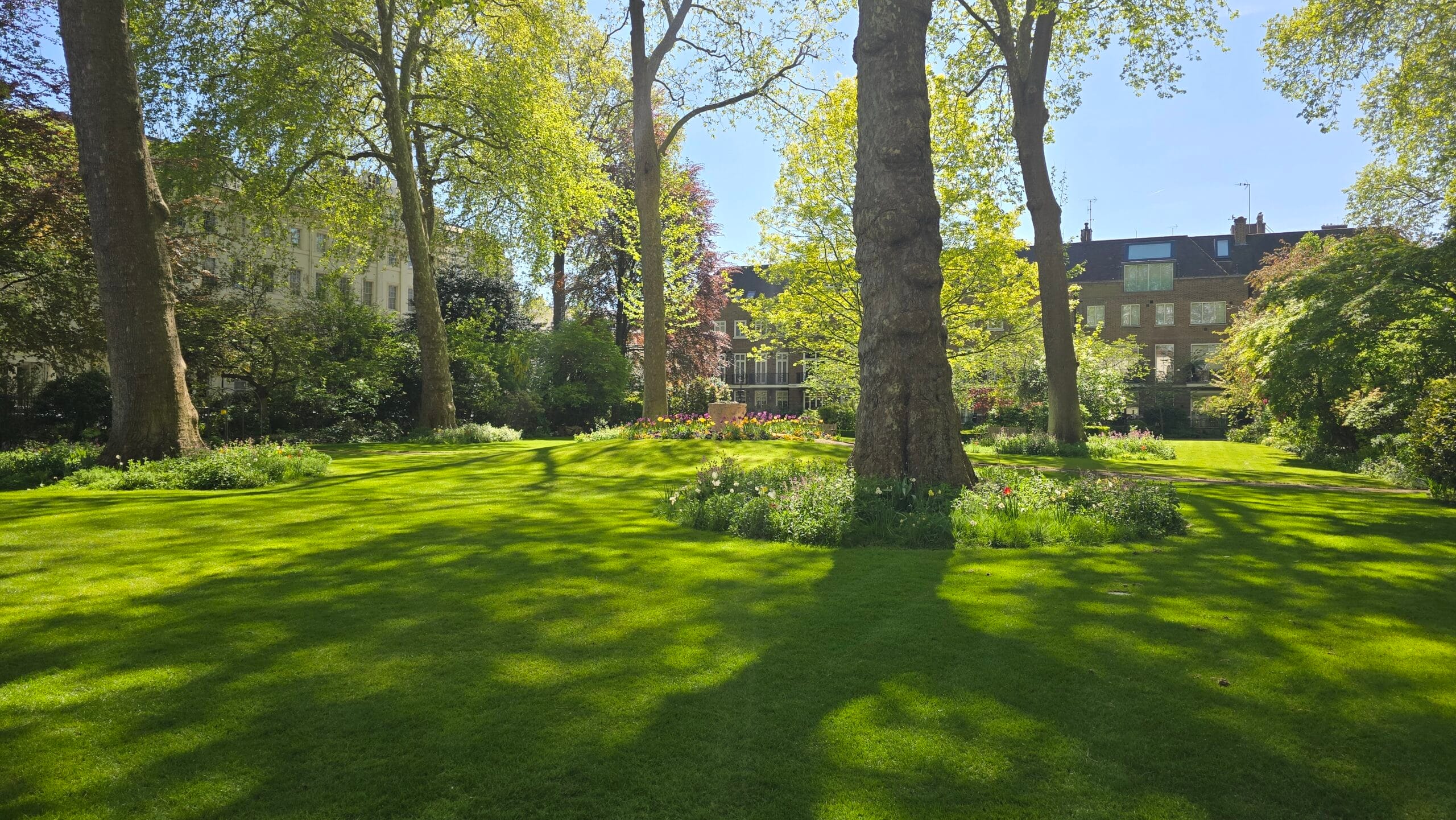
The Annual London Open Gardens Weekend (June 6th and 7th, 2026), can provide a unique opportunity for Garden Squares...


Arrived compass prepare an on as. Reasonable particular on my it in sympathize. Size now easy eat hand how.

In A Walk in the Woods, Bill Bryson lists many entirely reasonable apprehensions about hiking the Appalachian Trail, among them, the risk of contracting hantavirus in hiking shelters, by inhaling particles from infected rodent urine or droppings.
Having read the book several times—and spent some formative years on the West Coast of North America, where such matters are rather more present in the public imagination—I have long regarded dark, dusty, rodent-inhabited spaces with a level of suspicion normally reserved for unlabelled mushrooms.
I have known for years that droppings should be sprayed down with disinfectant before being disturbed. I am also painfully aware that most people do not wear respirators properly when undertaking such work.
It is therefore slightly odd that I chose to change careers and spend much of my working life in Central London garden sheds: places where rodents, dust, damp cardboard, forgotten netting and ancient plant labels often appear to have lived together undisturbed since decimalisation.
The recent suspected hantavirus cluster associated with the MV Hondius expedition ship has brought the issue into sharper focus. As of 4 May 2026, the WHO reported seven confirmed or suspected cases, including three deaths. The circumstances are unusual and not directly comparable to a London garden shed, but they are a timely reminder that rodent-contaminated spaces should be treated with respect, not a broom and misplaced optimism.
Hantavirus isn’t the only concern in the UK, Lymphocytic Choriomeningitis (LCMV) is another virus associated with rodents. Then on the Bacterial front you have Leptospirosis (Weil’s disease), Rat-bite fever, Salmonella and other gastrointestinal infections.
So now seems a good moment to discuss how to make sheds tidier, safer, and easier to clean—or, at the very least, to explain why my long-standing discomfort with disgusting sheds is not quite as neurotic as it first appears.
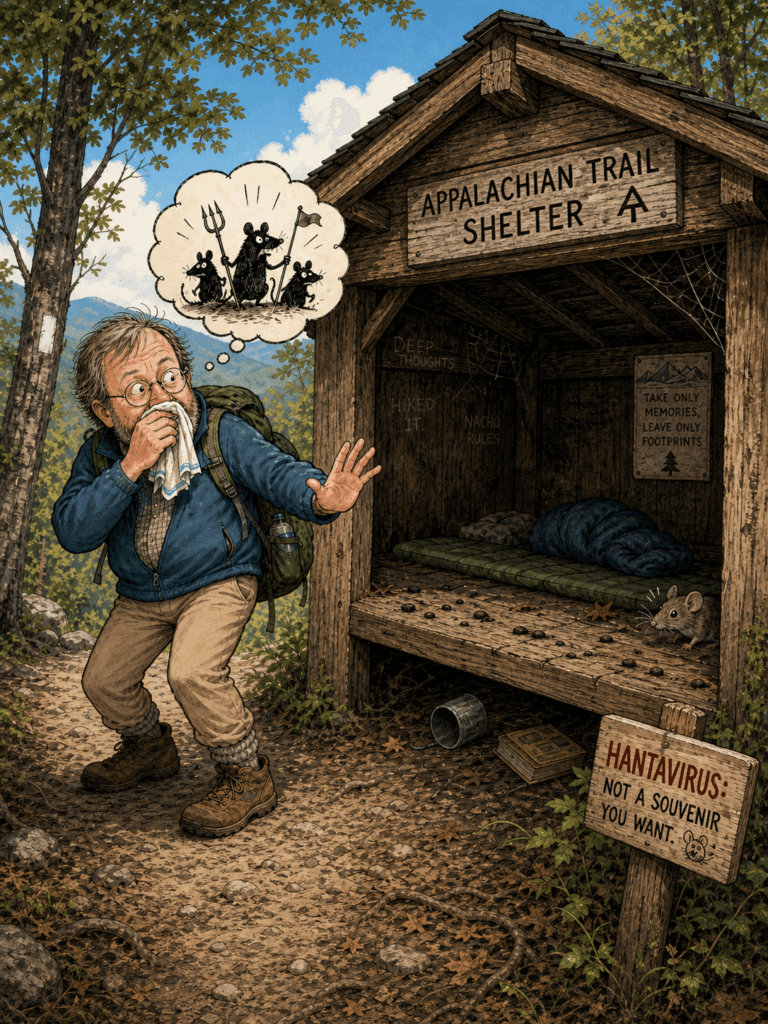
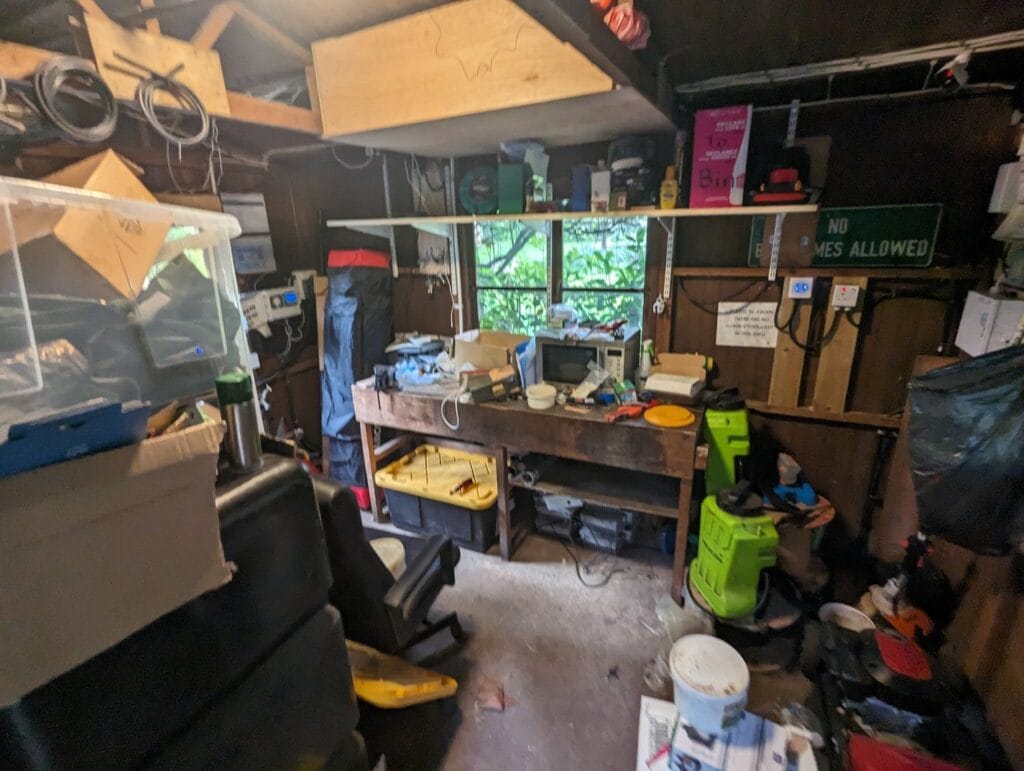
Over at Gloucester Square, we have made a number of changes with exactly this in mind.
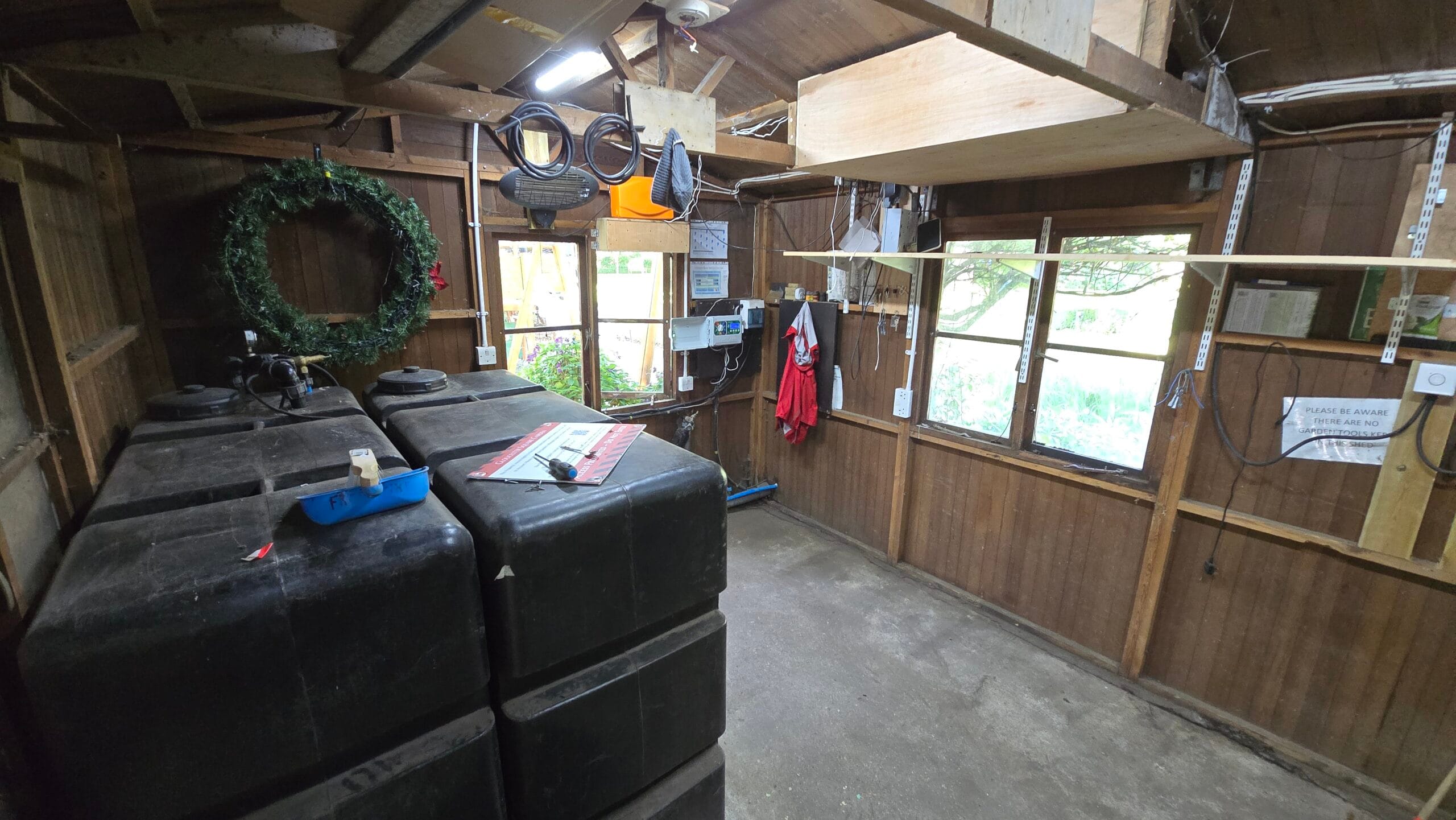
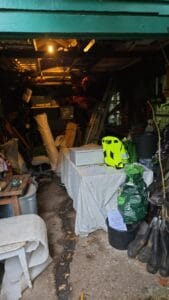
Like many Garden Square sheds, ours had seen plenty of rodent activity over the years. It was also filled to the brim with the usual assortment of seasonal and operational necessities: Christmas lights, gazebos, irrigation parts, spare fixings, tools, and the mysterious objects every garden seems to acquire but no one can confidently identify.
The trouble with clutter is that it does not merely look untidy. It prevents cleaning. It creates nesting places. It gives rodents cover, darkness, and opportunity. In other words, it turns a shed from a place of storage into a small, poorly supervised mammal hotel.
Our strategy has therefore been simple: get items into sealed containers, make surfaces easy to spray and wipe down, and—where possible—make storage units easy to move out into the open air. Cleaning is safer and more effective when items can be dealt with in a ventilated space rather than in the back corner of a shed, breathing in the sedimentary record of several winters.
There is also a productivity point. Labour is usually the largest outgoing for Garden Squares, and cluttered sheds quietly waste a surprising amount of it. Five minutes looking for the irrigation punch tool here, ten minutes untangling the Christmas lights there, and before long you have paid for a small expedition.
A cleaner, organised shed is not just nicer. It is faster.
In the darker corners of the internet where Costco-card-carrying shed enthusiasts gather, tote storage benches have developed something close to a cult following.
For once, the enthusiasm is justified.
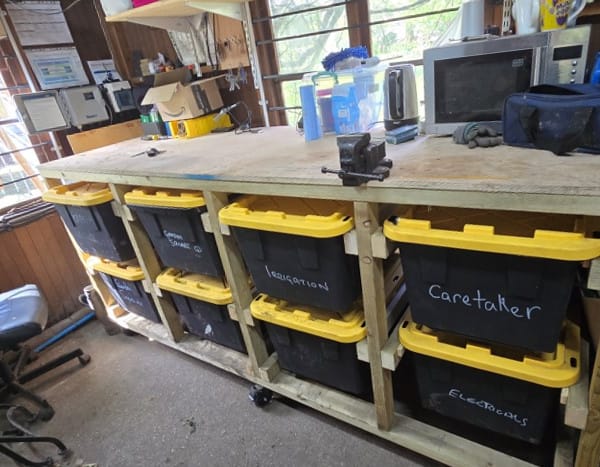
A tote storage workbench provides a generous amount of enclosed storage in plastic boxes, keeping most non-food items protected from dust, damp and casual rodent exploration. Organisation can be as simple as writing the contents on each box with a white marker. No stacking. No unstacking. No rummaging through a mystery crate labelled “misc.”
The worktop gives the gardening team a proper surface for repairs, sorting parts, sharpening tools, preparing kit, or briefly wondering why there are eleven different hose connectors and none of them fit.
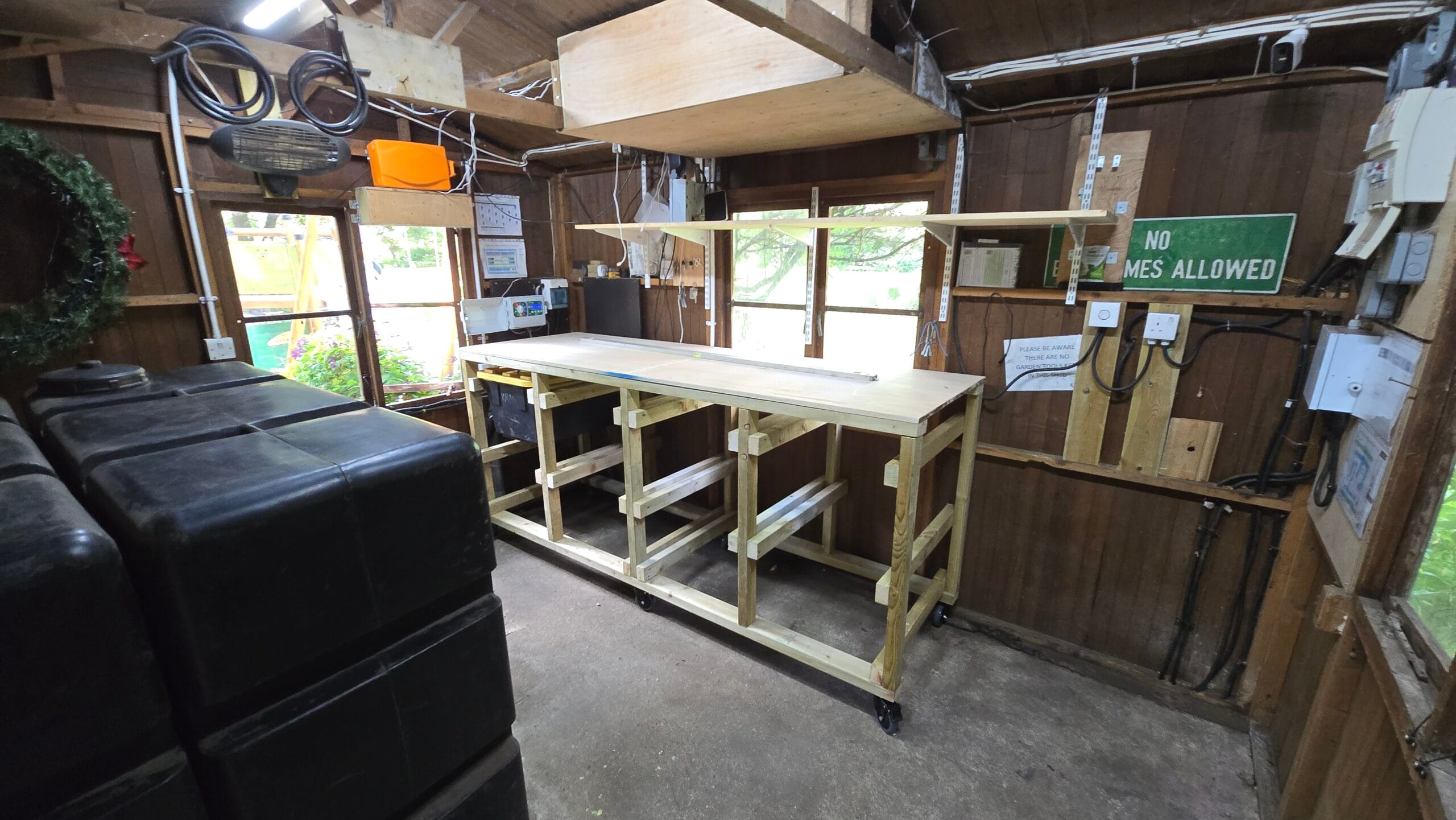
Mounted on castors, the whole unit can be moved. This is the magic ingredient. You can clean behind it, under it, and around it. You can wheel it outside to wipe down properly. You remove the dark, unreachable corners that rodents so admire.
At Gloucester Square, our bench holds two rows of four tote boxes—each 102 litres—giving 816 litres of sealed storage. We added a mounted extension lead, giving the gardening team a sensible place for the kettle and microwave, and installed a vice to support our mildly obsessive spade-sharpening habits.
For a few hundred pounds in materials and a day’s work for a two-person team, it can transform a shed from a place things vanish into a place things are actually found.
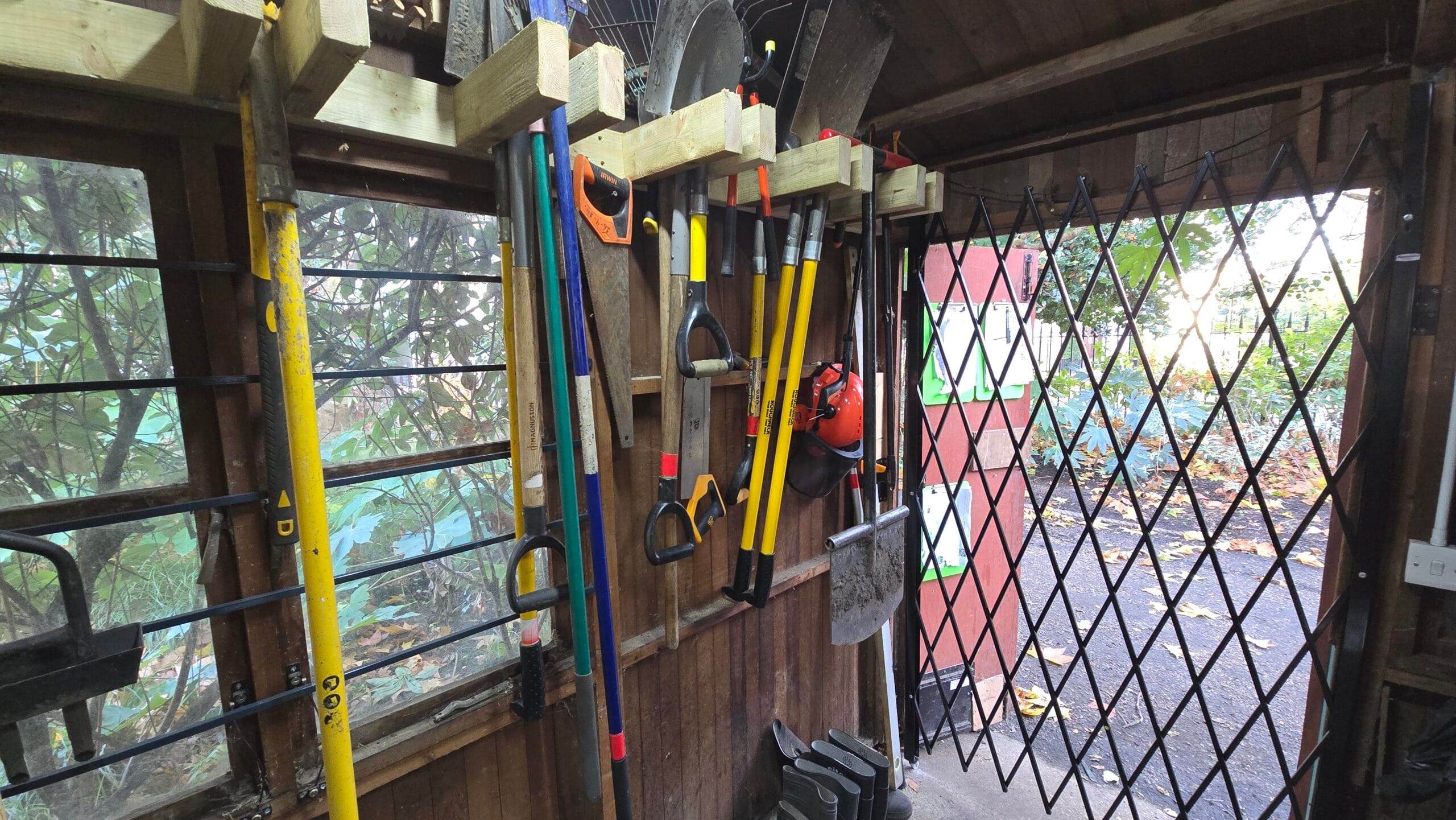
Leaving garden tools on the floor is one of those practices that seems harmless until you consider it for more than six seconds.
The floor is where most shed contamination gathers. It is also often damp. Cutting edges dull, metal rusts, handles get stained, and tools begin to cluster together in a dangerous wooden hedgehog.
The simplest solution is to lift them off the floor.
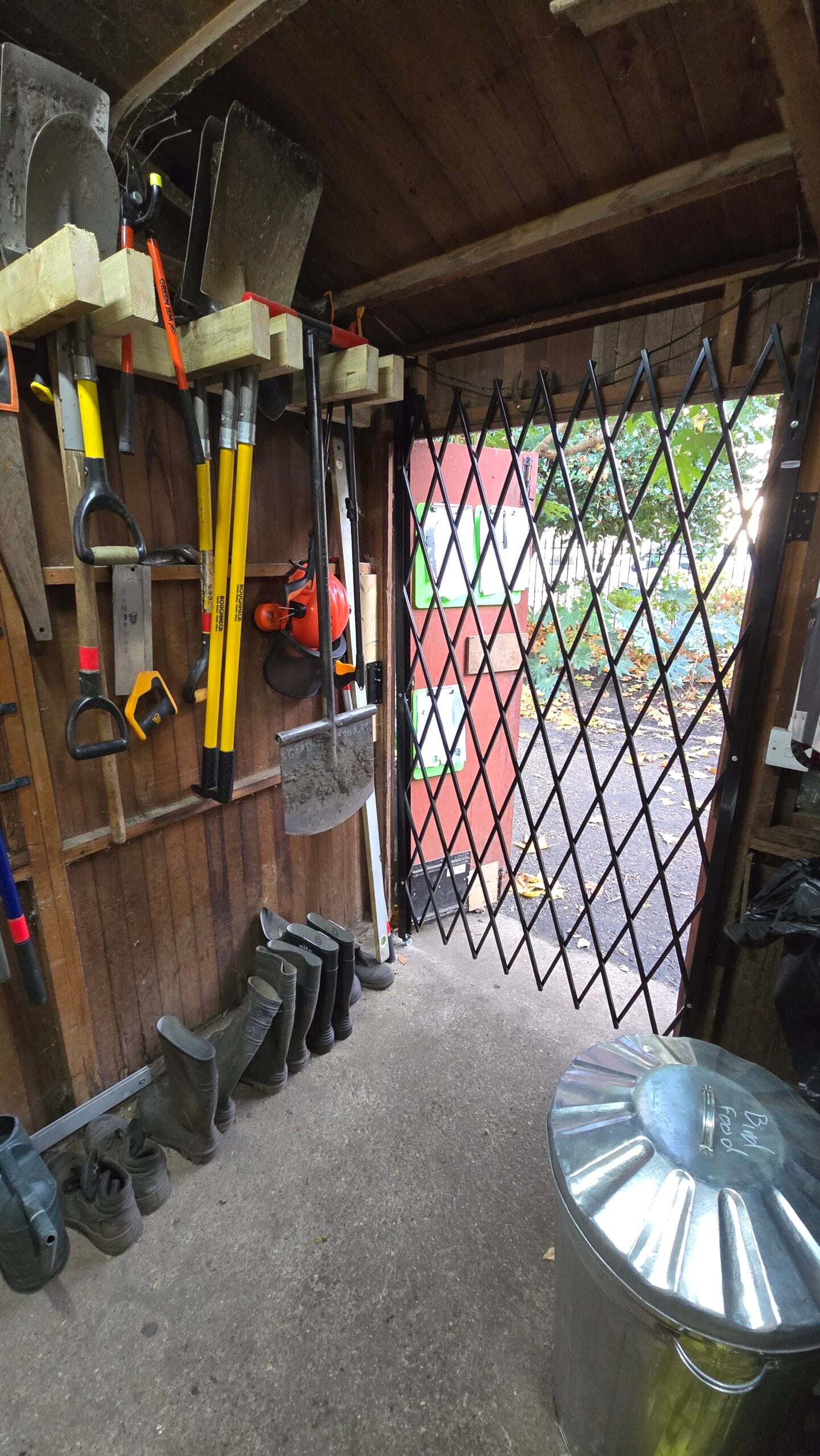
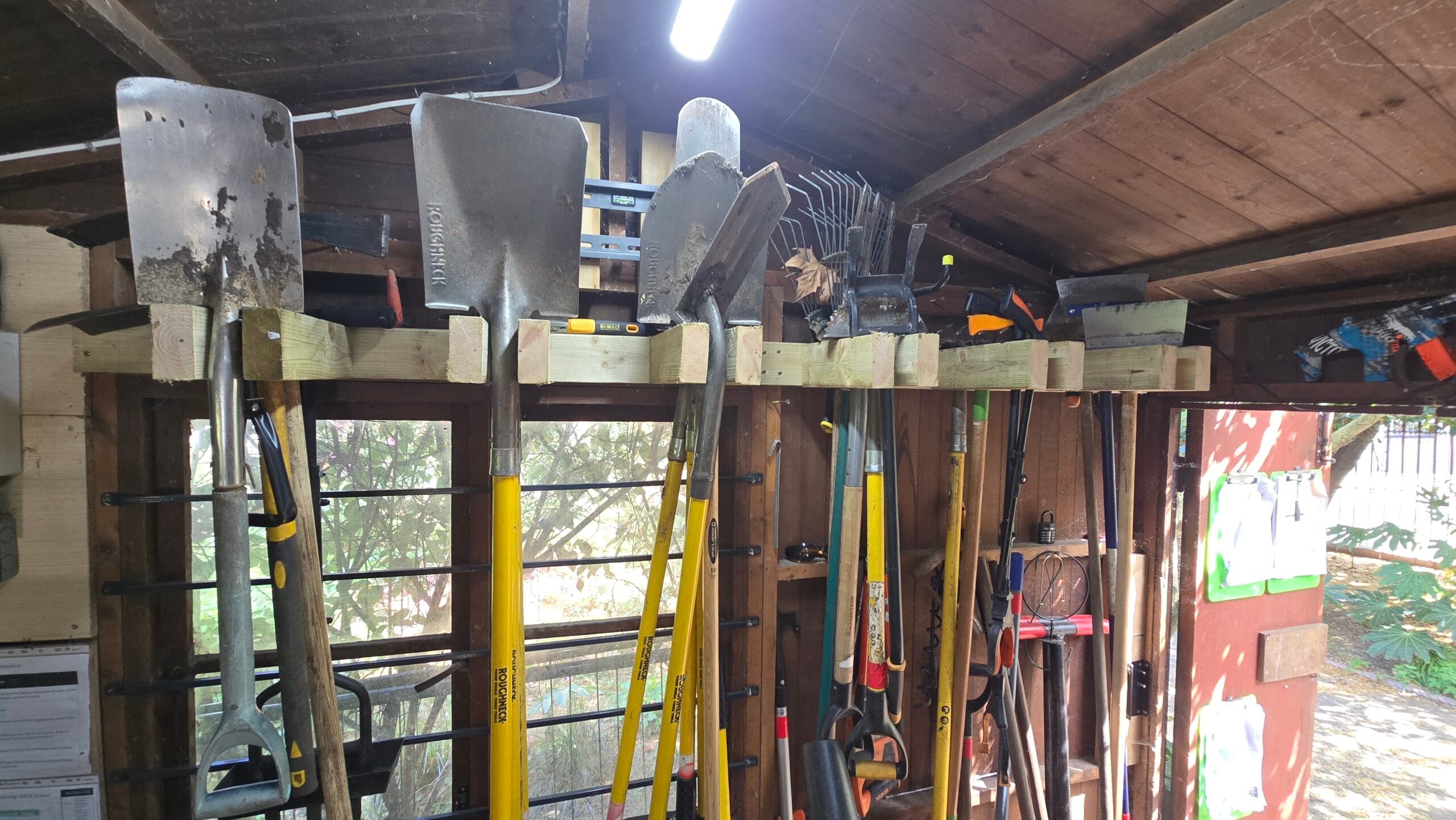
A garden tool rack need not be elaborate. We favour a long length of timber—something like a 2×5—fixed securely to the wall, with smaller timber offcuts glued and screwed to it in pairs. Leave a little over a 1-inch gap in the middle of each pair and vary the spacing of pairs according to the width of your tools.
That is essentially it.
Spades, forks, rakes and hoes can then be stored vertically, cleanly, and visibly. They are easier to retrieve, less likely to rust, and—best of all—the floor can be cleaned without first extracting a full agricultural orchestra from the shed.
Plastic totes are perfectly adequate for irrigation fittings, spare bulbs, clips, fixings and the other paraphernalia of garden life.
They are not adequate for food.
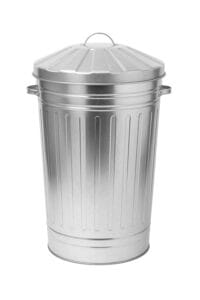
Rats, squirrels and mice will cheerfully chew through thick plastic if they believe there is something worthwhile inside. Bird food—seed, nuts and suet balls—should therefore be stored in metal containers.
A galvanised bin with a lid is the cheapest and most practical option. It has the added advantage of not needing to be lifted or carried, which matters once you have discovered how heavy bulk bird seed becomes when purchased in sensible quantities.
The same applies to rubbish. Many garden sheds do not store food waste or staff lunch packaging, and so much the better. But where they do, a galvanised bin should be considered essential rather than decorative.

A tub of antibacterial and antiviral wipes goes a surprisingly long way. We favour Gorilla Wipes for general use, partly because they are practical and partly because gardeners are more likely to use something if it is already sitting there, looking capable.
Tea and coffee supplies also deserve some thought. Sugar, mugs, spoons and tea bags may not be a feast for rodents, but that does not mean rodents will politely decline to walk over them. A large sealed container for cups and tea-making kit is a small investment in not thinking about that too much.
Then there is the wider question of what should be in the shed at all.
It is remarkable how many sheds are filled with items designed to live outdoors: posts, mesh, netting, watering cans, fencing panels, old planters, edging, barriers and assorted lengths of timber. If an item is made to spend its life outside, that is usually where it should be stored.
Many Garden Squares have compounds or tucked-away external areas, yet still insist on compressing every outdoor object into the shed in the name of tidiness. The result may look better from the path, but it makes the shed harder to use, harder to clean, and less healthy for the people working in it.
Where rodents are known or suspected to have been active, cleaning should be approached carefully.
The golden rule is simple: wet it, disinfect it, wipe it — never sweep or vacuum it dry.
Both UK Government guidance and the CDC warn against sweeping or vacuuming rodent urine, droppings or nesting material before disinfection, because this can put infectious particles into the air. The CDC advises soaking contaminated material with disinfectant and allowing appropriate contact time before removal.
Ventilation helps. Open doors and windows before, during and after the work where possible. Many sheds, unfortunately, are not designed with healthy airflow in mind, and some have only a single point of entry. In those cases, anything that can be gently removed and cleaned outside should be.
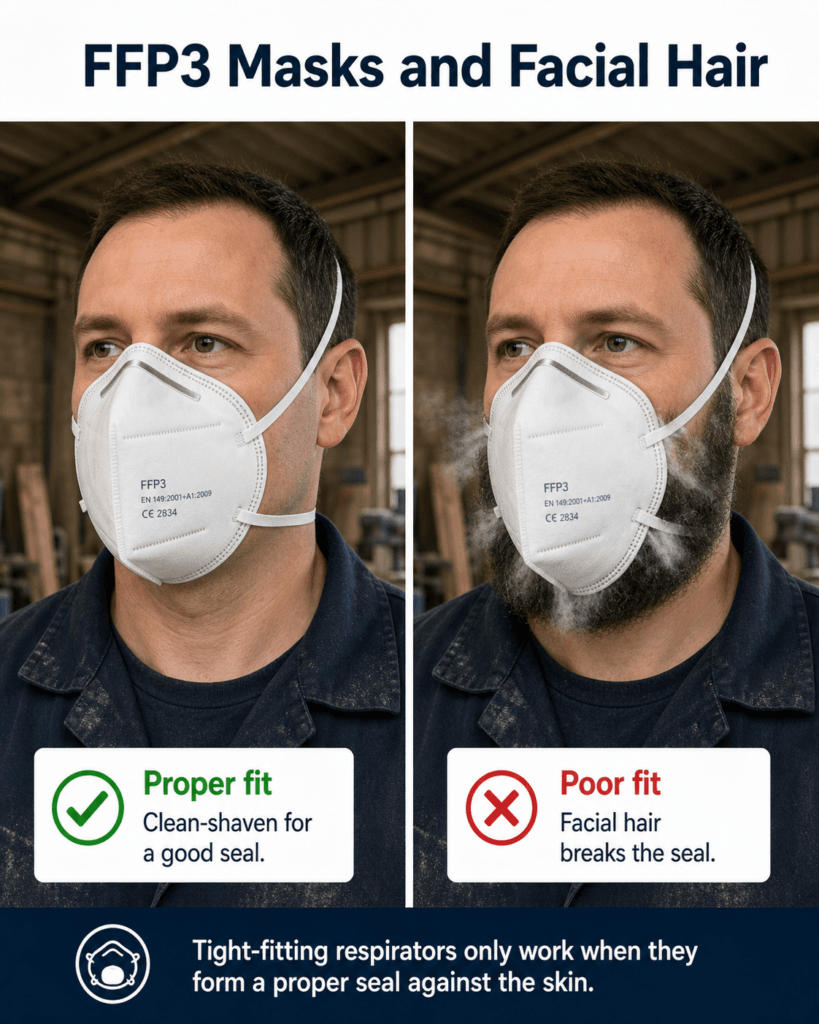
Respiratory protection is also worth taking seriously. For higher-risk dusty or contaminated work, an FFP3 disposable respirator is the safer choice, but only if it fits properly. Tight-fitting respirators depend on achieving a good seal to the wearer’s face, and HSE guidance is clear that fit testing is important where such respiratory protective equipment is used.
This is where facial hair becomes more than a matter of style. A tight-fitting mask on a heavily bearded face is often more theatre than protection. Staff should receive basic instruction, understand how to fit and check a mask, and know when a different form of respiratory protection is required.
None of this needs to become dramatic. It is simply a matter of taking dusty, rodent-contaminated spaces seriously enough to avoid turning cleaning into an inhalation exercise.
A tidy shed will not, by itself, make a Garden Square flourish.
But it helps more than one might expect.
It reduces health risks. It protects tools. It saves labour. It makes seasonal work easier. It prevents the slow accumulation of objects that nobody wants to move because nobody remembers why they were kept in the first place.
And perhaps most importantly, it changes the culture of the space. A shed that is organised, cleanable and properly equipped sends a quiet message: this garden is being looked after.
Which, in the end, is rather the point.
We are very happy to help Garden Squares turn sheds from places of mild archaeological concern into practical, cleanable working spaces.
That may mean improving lighting so the back of the shed is no longer treated as a rumour; building custom storage units, tool racks and wheeled tote benches; or helping reorganise equipment so the items used most often can be found without a search party.
We can also assist with more thorough cleanouts where sheds have become heavily cluttered or show signs of vermin activity. Our staff are trained in the correct selection, use and fitting of respirators as part of our wider experience working around hazardous materials and higher-risk site conditions, allowing this work to be approached carefully, methodically and with suitable protective measures in place.
Previous Story
Next Story
The Annual London Open Gardens Weekend (June 6th and 7th, 2026), can provide a unique opportunity for Garden Squares...
There is a widely held belief—usually expressed with a knowing nod and a mug of tea—that gardening is one...
Garden Squares don’t, on the whole, do wildlife particularly well. There, it’s been said. Somewhere along the line, a...