


If I could highlight the single greatest cause of Committee and Chairperson burn-out, it would be trying to enforce Garden rules, only to face a wave of abuse from neighbours.
Rules only work when they are followed consistently. Otherwise, the rule-observers get less benefit, less utility and less use from the Garden than the rule-flouters. That creates a two-tier Garden, which is neither fair nor sustainable.
But enforcement is, without doubt, the least enjoyable part of running a Garden. I would take the several occasions each year when I have to remove human excrement from along Garden railings over dealing with an entitled resident in full moral outrage.
Burnout is a real problem for GardenSqua.re. We spend a lot of time building relationships with Committee members, only to see them give up after too much abuse. Nothing causes more arguments than ball sports — apart, perhaps, from dogs.
I am fortunate in one respect: we work in dozens of Garden Squares, so I know vitriolic responses to enforcement is not specific to my home Garden, or my Committee. It is endemic.
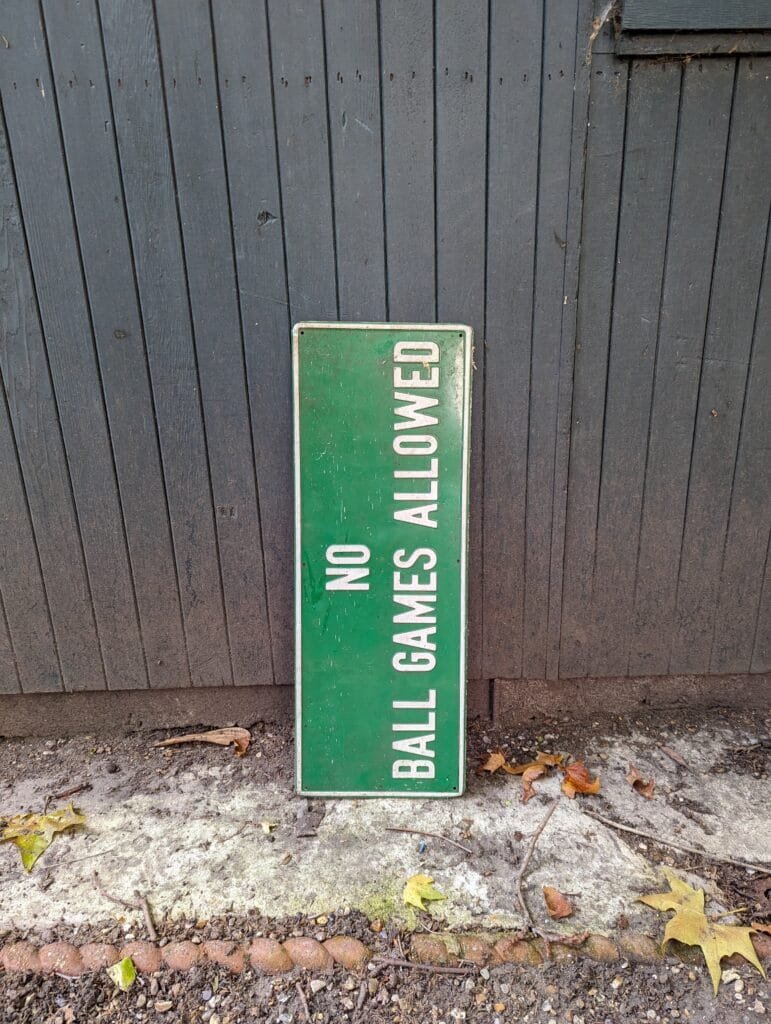
But the problem is made worse where rules are so extreme that they encourage nonconformity. That is why we need to talk about ball sports, and particularly the “No Balls” rule, which I consider unnecessarily contentious. We work in plenty of Gardens with a no ball sports rule. We are yet to find one where it is actually respected or consistently enforced.
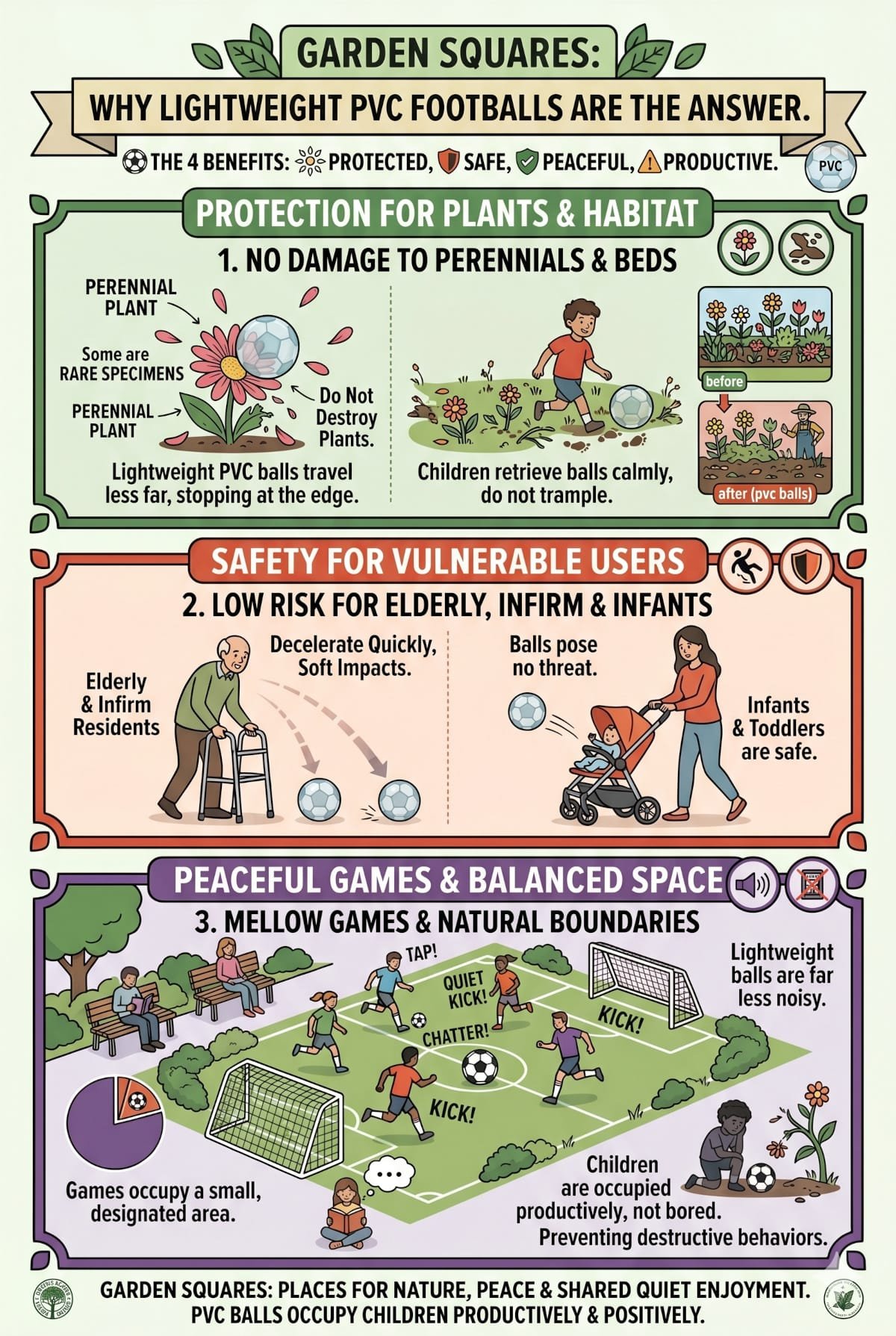
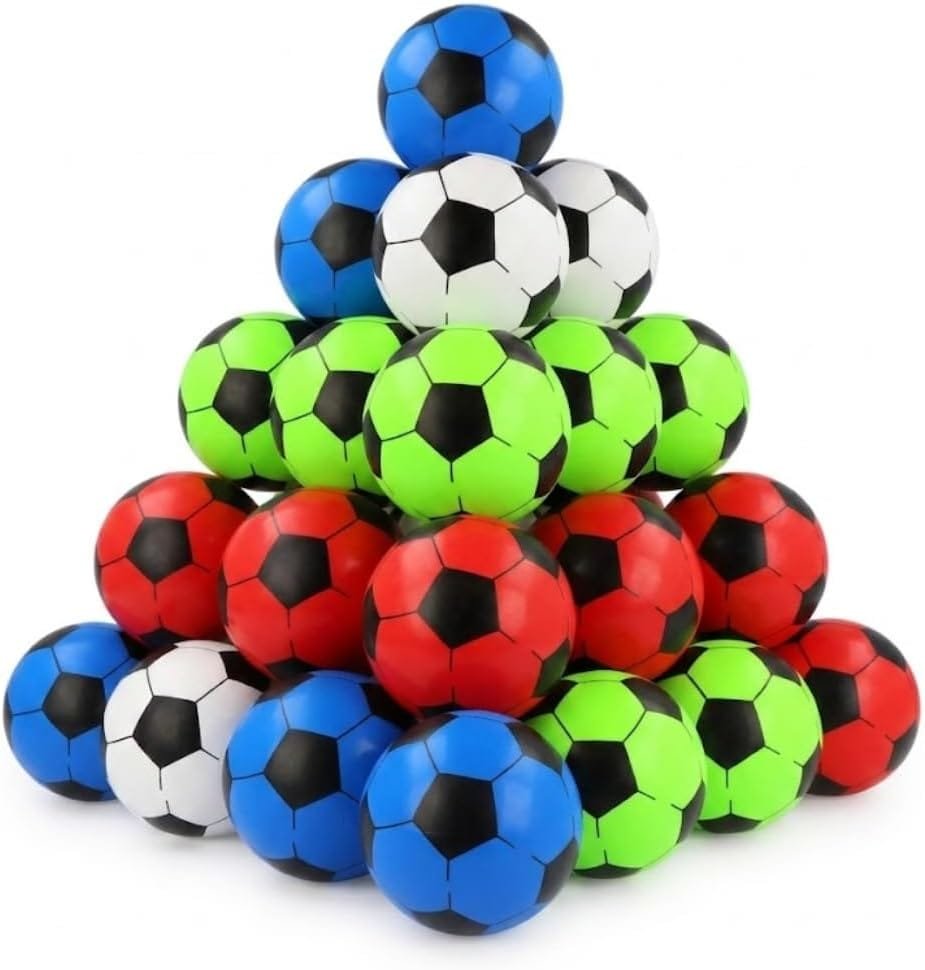
The solution is simple: provide lightweight PVC footballs and foam play balls in the Garden, and insist residents use them instead. They do not travel as far, they do not kill plants on impact, they pose little-to-no risk to other residents, and make enforcement a relative doddle.
Most importantly, they remove the best excuse from the entitled Garden User’s armoury: “But what are the children supposed to do?”
3Ds of Ball Sports: Damage, Danger and Disruption
Garden Squares are not recreation grounds. Many were established as ornamental pleasure gardens in their founding documents or leases. That distinction matters.
A Garden should be a place for recreation, but not every form of recreation is suitable. Most reasonable people can see the issue with regular ball sports in a shared ornamental space.
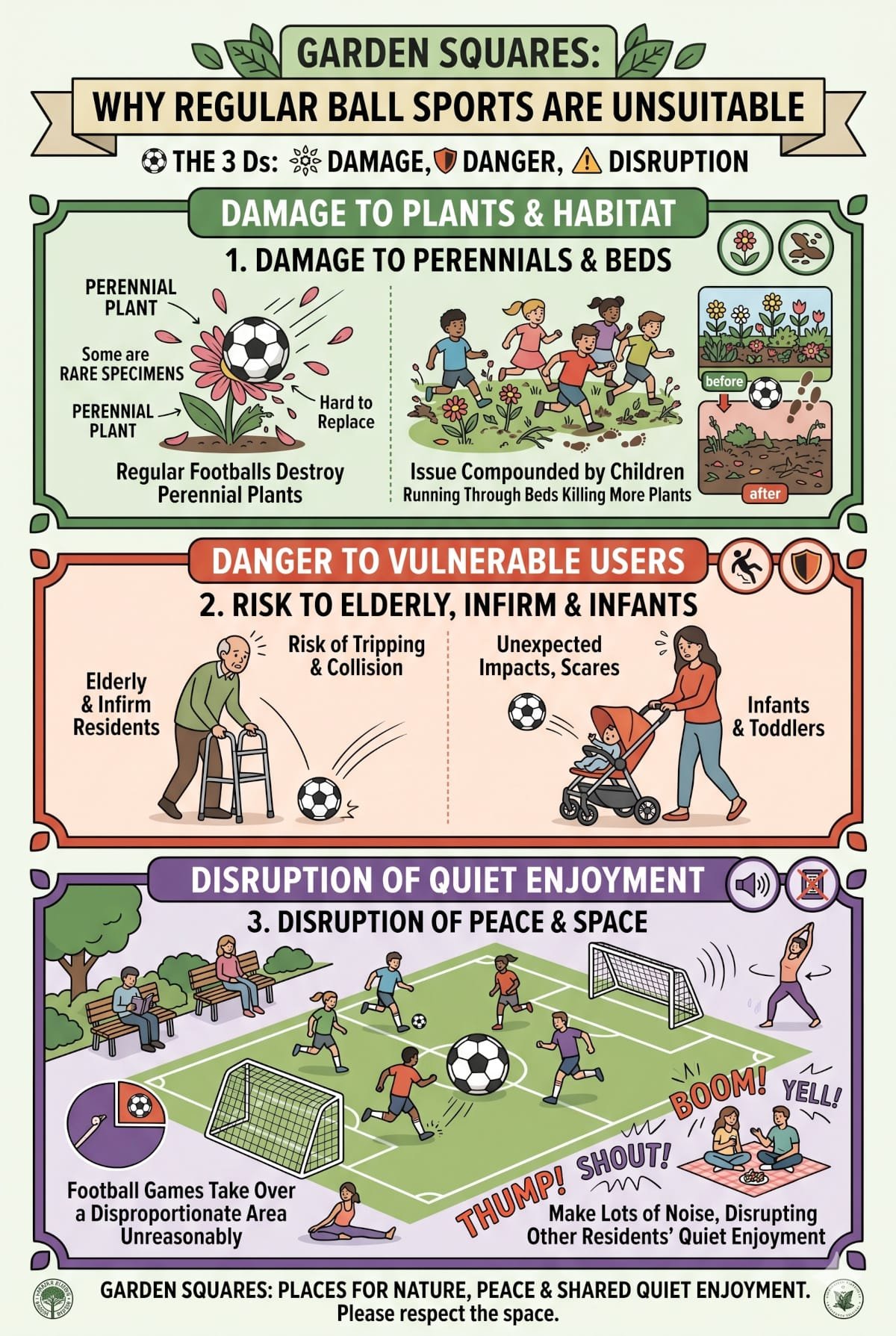
The problem falls into three familiar categories: damage, danger and disruption.
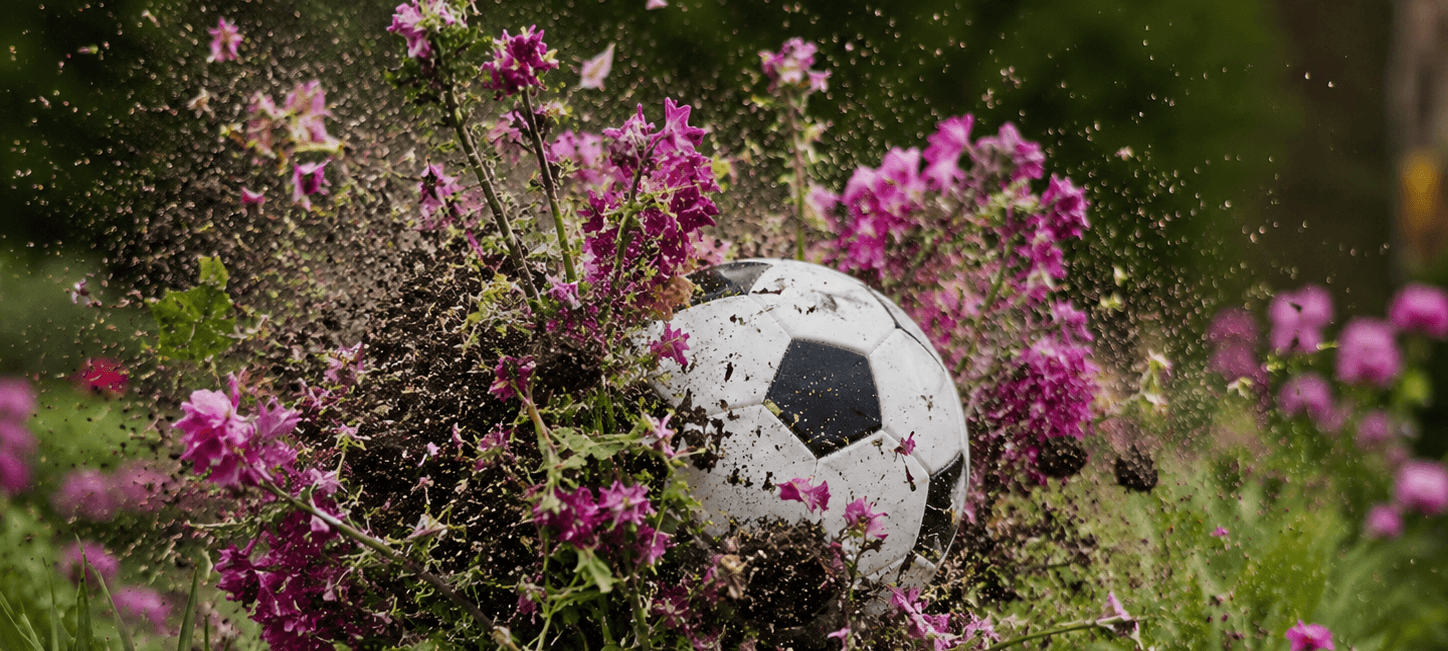
Damage is the most obvious. A regular football can travel deep into planted beds, crushing anything in its path. The plants that survive the ball are then finished off by the wave of children running into the bed to retrieve it.
Committees can spend months improving a border, only to see it treated as the outfield at Wembley by someone who “only kicked it once”.
Danger is just as important. Gardens should be welcoming spaces for all residents, including those who could be easily hurt by regular sports balls or aggressive games. That includes football, rugby, cricket and tennis.
I have toured a Garden with a resident in their nineties, only to have young men thump a football within inches of our heads. I have also had a football narrowly deflected from the awestruck face of my one-year-old daughter.
These are not abstract risks. They happen.
Disruption is the third issue. Because regular balls travel so far with a single kick, they can take over large areas of the Garden. That restricts the space other ratepayers can enjoy.
Regular balls also create a racket. They are noisy when kicked, hit or bounced, and particularly irritating when repeatedly fired against railings, walls, benches or anything else that was not designed to be a percussion instrument.
But there's a better answer than outright bans
A total ban on ball sports is very restrictive, especially for younger Garden users who need to get outside and burn off energy. If children are prevented from enjoying the lawns in any reasonable way, they are more likely to find less reasonable forms of entertainment.
That usually means shoving sticks into shed locks, climbing into leaf stores, throwing gravel, swinging from branches, or testing whether every gate, box and cupboard in the Garden can be forced open.
If you ban all ball play, you should expect to police not only ball sports, but also the consequences of bored children.
What is needed, is sports equipment that:
- Doesn’t damage plants
- Doesn’t pose a danger to the most vulnerable garden users, and
- Doesn’t disrupt large swathes of the Garden
And then you need to find a way to make it so easy for Garden Users to use the correct type of equipment, that any reasonable minded individual opts to conform, rather than seek special-treatment.
The Typical Enforcement Response: Offended by Everything, Ashamed of Nothing
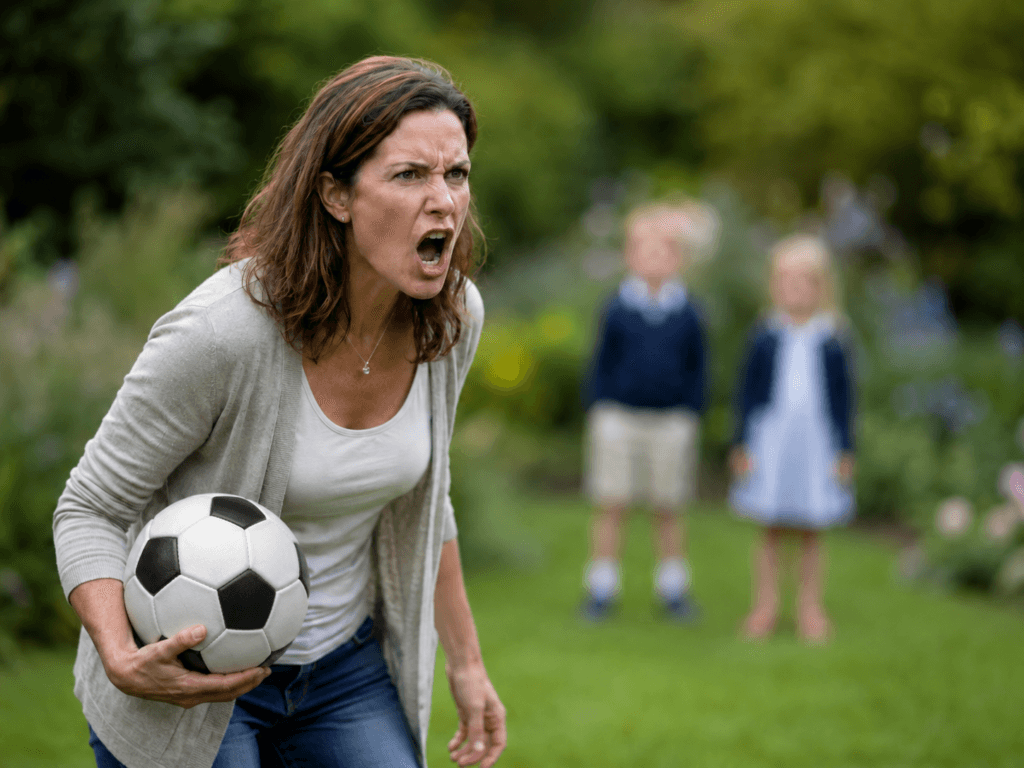
Seasoned Committee members will know the pattern. A seemingly sweet young person, often supervised by an adult nanny terrified that a tantrum may result in immediate dismissal, does something foolish in the Garden.
You introduce yourself. You politely explain that the behaviour is not in keeping with the rules or general decorum of the Garden. You ask whether they could reconsider.
In return, you meet the wrath of the truly entitled: the ashamed-of-nothing-but-offended-by-everything brigade, so populous in 2026. I consider myself relatively thick-skinned, but I have had all sorts of insults hurled my way.
“Gestapo” was a particular highlight, as was the follow-up accusation of “banning people from sitting on the grass”, which was not something I had ever proposed, considered or imagined.
On another occasion, a parent told me I should be picking up rubbish rather than bothering them about their children’s behaviour (throwing large pebbles at each other). They added that, given all the fees they paid, they expected better. It later transpired they were not a ratepayer; they had cloned a fob and had been gaining access dishonestly for several years.
My team are now advised not to approach anyone about damaging or dangerous behaviour in Garden Squares without first turning on voice recording on their phone. That may sound excessive. Unfortunately, so are some of the accusations made by Garden users when asked not to behave badly.
This is why outright bans can be so difficult. They are often the most contentious rules to police. They create hard edges, regular confrontation and endless argument about whether the rule is fair, whether it applies in this case, and whether little Horatio’s gentle first touch is really the problem.
The Solution: Provide Lightweight PVC Footballs and Foam Play Balls
The solution has been around for decades.
You can see it in schoolyards across the country, especially where single-pane windows have forced a ban on regular hard balls. Children still play. Windows mostly survive. Everyone carries on.
Lightweight PVC footballs travel far less distance. Even Ronaldo would struggle to thump one more than about ten feet. They make far less noise, and they do little-to-no damage when they hit a plant, person, chair, railing or committee member.
They allow young people to enjoy the lawns and burn off energy without turning the Garden into either a sports pitch or an enforcement zone.
You can combine them with foam rugby balls, foam tennis balls and foam cricket balls.
The key is that the balls must be light, soft and difficult to kick, throw or hit great distances. Some foam balls are surprisingly springy, so committees should choose carefully. The ideal Garden ball should be slightly pathetic. That is the point.
Do Not Rely on Ratepayer Interpretation — Provide the Balls
Rules that require ratepayer interpretation or prior planning are destined to fail.
So do not ask residents to go away and buy a particular type of ball. Provide the balls in the Garden.
A 10-pack of lightweight PVC footballs costs as little as £10.99. Add a £23 electric pump and you can cater for a great many young Garden users for less than the cost of one mildly irritating contractor call-out.
If you want to cater for more sports, add foam rugby balls, foam tennis balls and foam cricket balls. Just make sure they are properly squishy. A foam ball that behaves like a missile is not an improvement. It is just a missile with better branding.
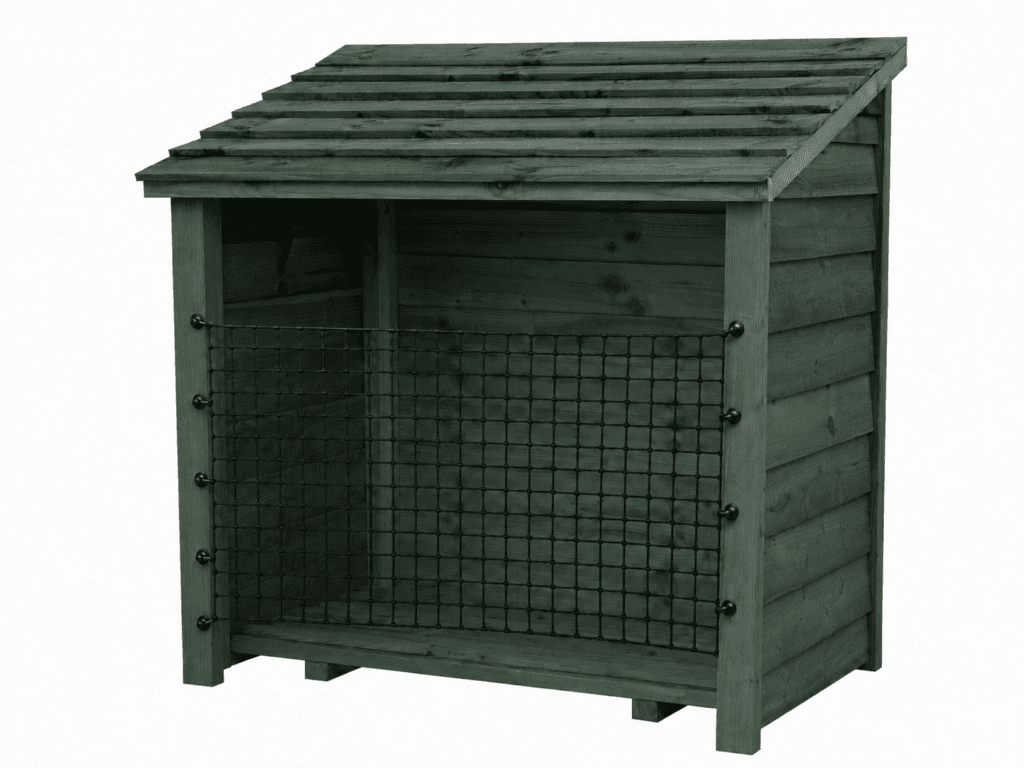
Storage can be simple. You can leave balls out on the lawn and replace them as needed, use existing Garden storage, or install new storage.
If buying new storage, we would recommend a timber log store, painted dark green with Bedec Barn Paint, with a stretch net across the front. It is simple, unobtrusive and makes the balls visible and easy to access.
The convenience factor is crucial.
Parents know their children do not need to find a ball at home. Children know they can use the balls already provided. And when you ask a resident not to use a banned type of ball, you have a ready alternative to hand.
That changes the conversation. You are not simply saying “No”. You are saying “Use this instead”.
That is much easier to enforce, and much harder for a resident to object to without sounding utterly supercilious.
Lessons from my Home Square
When I joined my Square’s Committee, the previous “No Balls” rule had been recently modified to “No Competitive Ball Sports”.
I am sure you can see the problem. What counts as competitive? Keeping score? Trying to win? Joining a league? Handing out a trophy? Looking a bit too pleased with a goal?
It was well intentioned, but unenforceable. A lame duck in football boots.
My Square is only a few minutes’ walk from Hyde Park, which makes the case for banning football stronger than in many Gardens. Even so, we chose a more reasonable middle ground.
In year one, we changed the rule so that only lightweight PVC or foam sports balls could be used by under-12s.
Enforcement was constant. Regular footballs were still used. When challenged, residents would simply say their regular football was light or soft. This was often said with the confidence of someone who had discovered a devastating legal loophole, rather than the truth, which was that they had brought a normal football into the Garden.
We persevered.
In year two, a motion to provide lightweight balls was rejected by the Committee. Instead, we published a comprehensive Ball Sports policy online, including links to suitable balls residents could buy.
This improved enforcement, but did not solve the problem.
Every new resident meant another explanation. Every family summering in London meant another debate. Plenty of parents still became irate when told their children could not use the ball they had brought, particularly as they had no suitable alternative to hand.
By the end of year two, as the person doing most of this enforcement, I went rogue and bought PVC balls myself to hand out to residents using unsuitable balls.
This de-escalated most conversations immediately. Residents were being given a free PVC ball. At roughly £1 each, this was money well spent to preserve what remained of my sanity.
There were still exceptions. The odd particularly entitled resident would lose the free ball they had been given and return days later with a regular football. At that point, sterner written warnings followed.
In year three, we introduced new resident storage lockers in the Garden for flexible seating, including tennis chairs and deckchairs. One unit had spare space, so we began storing PVC footballs there.
We checked every few weeks to make sure we had enough for the busiest days in the Garden.
This transformed adherence.
Families no longer had to store a suitable ball at home. They did not have to remember to bring one. They could simply say to their children: “Use the balls in the Garden”. Everything became simpler.
That is not to say enforcement stopped. There are still occasional families who appear to believe we are harming their child’s development into a footballing superstar by insisting on PVC footballs. This is, of course, how so many footballing greats got their start: not on municipal pitches or back streets of a favela, but in private Garden Squares, under the stern eye of a Committee member holding a clipboard.
But even those residents seem faintly aware that their position is silly.
Now in Year 4, we will likely ban residents from bringing their own balls into the Garden and insist they use only those provided in the Garden storage cupboard. It will only impact the stubborn few residents who still refuse to adhere to the existing rules, with most residents already using the balls provided.
It is a pity that the entitlement of a small minority, probably less than ten per cent, can restrict everyone else by exploiting contrived interpretations of clear and well-documented rules. But it is also predictable.
Thankfully, the convenience factor should make the transition much easier. Most parents seem happy with the current setup. Their children can come into the Garden and use the balls already provided.
My Advice
Skip the four years of headaches.
Provide lightweight plastic and foam balls in the Garden, and insist residents use them.
You will see far less damage, danger and disruption than you will from the failed enforcement of a “No Ball Sports” policy. Fewer plants will be damaged. Fewer residents will be put at risk. Fewer areas of the Garden will be taken over by regular footballs.
Children will still be able to play and will therefore be less likely to pursue more destructive activities. Parents will have a simple answer. Committees will have a rule that can actually be enforced.
And residents will get more benefit, more utility and more use from the Garden.
What’s not to like?
Previous Story
Spring Cleaning the Shed
Next Story